
Medical dermatology · Skin cancer and moles
Squamous cell carcinoma: skin cancer in sun-damaged areas
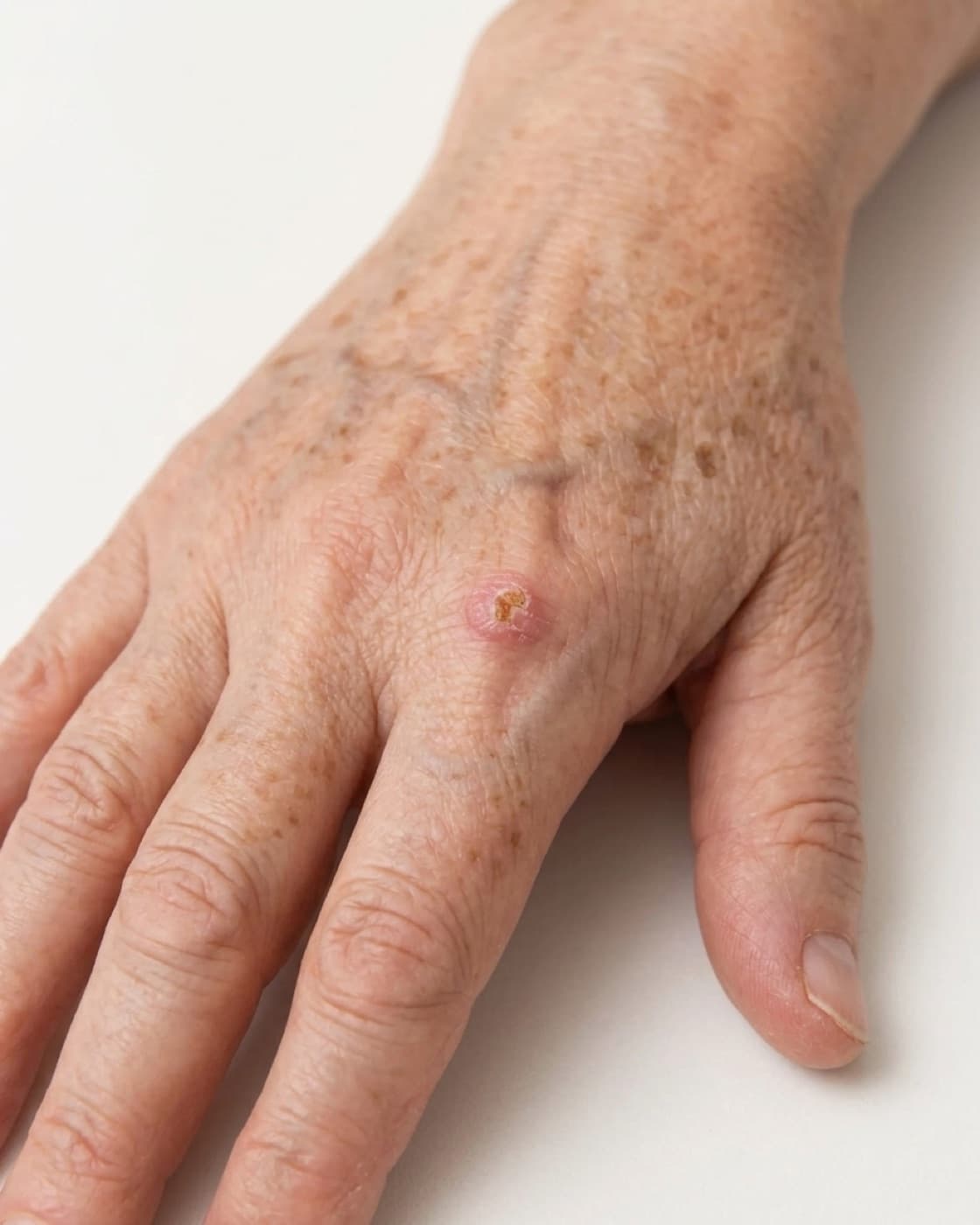
Squamous cell carcinoma is the second most common type of skin cancer. It appears mainly in areas with chronic sun damage, such as the face, ears, lips, bald scalp, back of the hands and forearms, often from actinic keratoses. It grows faster than basal cell carcinoma and can spread if left untreated, but has high chances of cure with early treatment. At Yamagata Dermatologia, in Ipanema, Rio de Janeiro, diagnosis and surgery are carried out by dermatologists.
Symptoms and how to recognize it
- A rough, red, crusted lesion that grows
- A sore that does not heal or bleeds
- A hardened nodule, sometimes with a central crust
- A sore on the lips that does not heal, especially on the lower lip
Causes and risk factors
The main cause is chronic sun exposure accumulated over the years. Fair skin, actinic keratoses, low immunity (such as after transplants), smoking (for the lips), some HPV infections and chronic wounds or scars also increase the risk.
Diagnosis
The dermatologist examines the lesion with dermoscopy and recommends a biopsy or removal for confirmation by pathology, which also assesses the tumor's risk features.
Treatments
- Dermatologic surgeryRemoval of the tumor with a safety margin, the treatment of choice.
- Complementary treatmentFor higher-risk tumors, together with other specialties.
Living with it and prevention
- Use sunscreen daily, including on the lips, ears and back of the hands.
- Treat actinic keratoses.
- Do not smoke.
- Keep up regular follow-up, especially after a first skin cancer.
When to see a dermatologist
See a dermatologist if you notice a rough or crusted lesion that grows, a sore that does not heal or a lesion on the lips that does not improve.
All procedures are recommended and performed after an individual medical evaluation. Results vary from person to person.
Questions
Frequently asked questions
How is it different from basal cell carcinoma?
Squamous cell carcinoma usually grows faster and has a higher risk of spreading to lymph nodes and other organs, although this is uncommon when treated early.
Does actinic keratosis turn into squamous cell carcinoma?
Some actinic keratoses can progress to squamous cell carcinoma, so they should be treated and monitored.
Who is at higher risk?
People with fair skin, intense sun exposure over their lifetime, many actinic keratoses, low immunity (such as transplant recipients) and smokers, in the case of the lips.
Can it be cured?
Yes, in the vast majority of cases, when diagnosed and removed early.
Team
Medical team
See also