
Medical dermatology · Skin cancer and moles
Moles: when to worry and when to see a dermatologist
Moles, or nevi, are benign clusters of melanocytes, the cells that produce skin pigment. Most people have between 10 and 40 moles, and almost all are harmless. The warning sign is change: a mole that grows, changes color or shape, itches or bleeds, or a new mole that looks different from the others, may indicate melanoma and should be evaluated with dermoscopy. At Yamagata Dermatologia, in Ipanema, Rio de Janeiro, mole checks, dermoscopy and total body mole mapping are carried out by dermatologists.
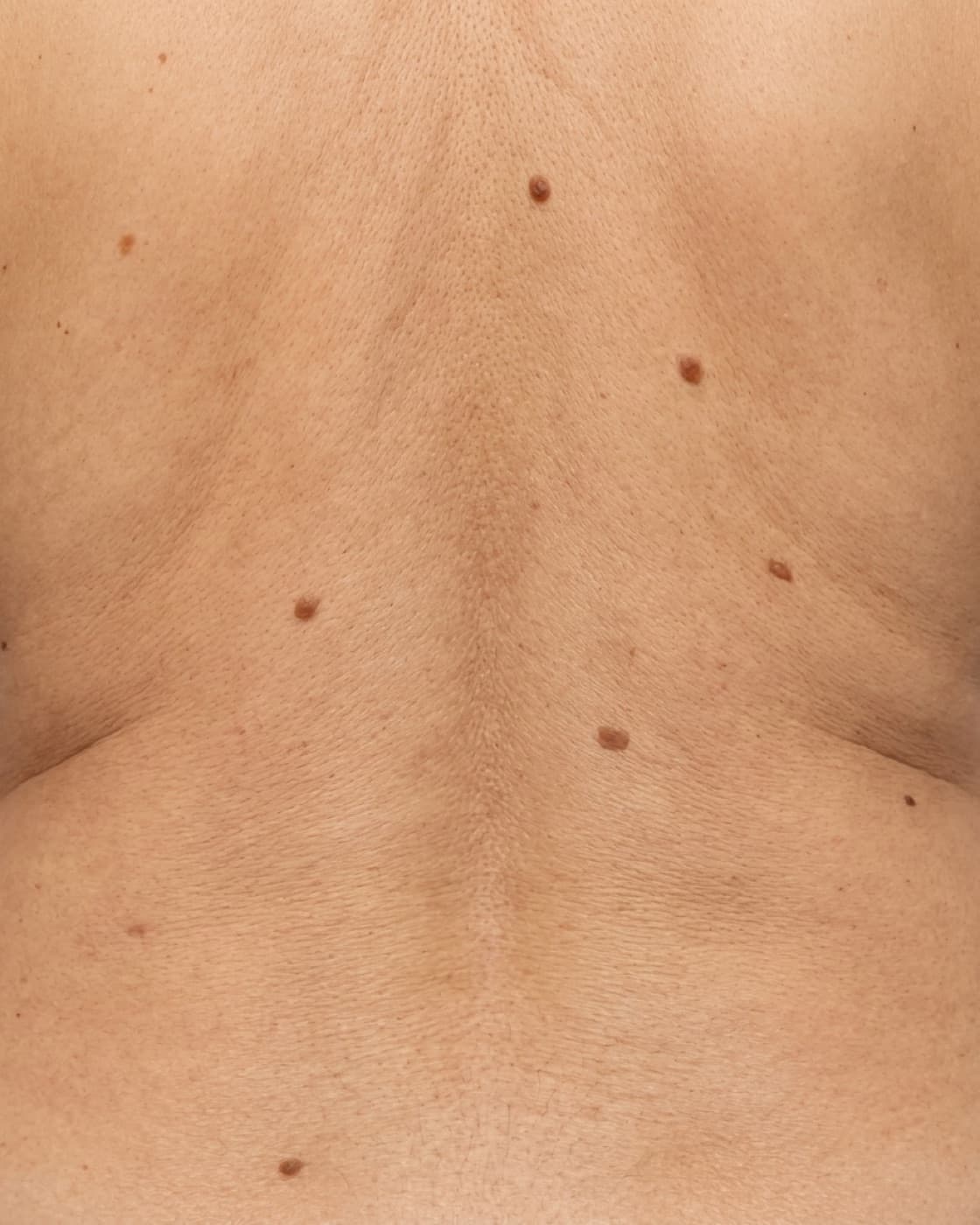
Symptoms and how to recognize it
Most moles are small, round and uniform in color. The signs that call for evaluation follow the ABCDE rule and the ugly duckling sign:
- Benign moles: symmetrical, with regular borders and uniform color
- Warning sign: asymmetry, irregular borders or several colors
- Warning sign: diameter larger than 6 mm or growth
- Warning sign: itching, bleeding or a sore on the mole
- Warning sign: a mole that looks different from all the others (ugly duckling)
Causes and risk factors
The number of moles depends on genetics and sun exposure in childhood. Having more than 50 moles, atypical moles (larger, with irregular borders or varied colors) or a family history of melanoma increases the risk of melanoma.
Diagnosis
The dermatologist examines the whole skin and evaluates the moles with dermoscopy. In people with many moles or atypical moles, total body mole mapping with FotoFinder® records the lesions and makes it possible to identify changes in follow-up exams. Suspicious moles are removed and analyzed under the microscope.
Treatments
- Dermatologic surgeryRemoval of suspicious moles, with pathology.
- MonitoringRecording and comparing moles over time, in people at higher risk.
Living with it and prevention
- Examine your skin monthly, including the scalp, soles and nails.
- Photograph the moles you want to monitor, for comparison.
- Use sunscreen and avoid sunburn, especially in children.
- Keep up regular appointments according to your risk.
When to see a dermatologist
See a dermatologist when a mole changes in size, color or shape, itches, bleeds or forms a sore, when a new mole appears in adulthood or when a mole looks different from the others.
All procedures are recommended and performed after an individual medical evaluation. Results vary from person to person.
Questions
Frequently asked questions
Is it safe to remove a mole for cosmetic reasons?
Yes. Removal is done in the office under local anesthesia, and the tissue is always sent for analysis. The technique is chosen to make the scar as discreet as possible.
Does a mole that appears in adulthood need to be checked?
New moles are common until age 30 to 40. After that, a new mole should be evaluated, especially if it looks different from the others.
Does touching or injuring a mole make it turn into cancer?
No. Trauma does not turn moles into cancer, but a mole that bleeds without trauma or does not heal should be evaluated.
Can laser be used to remove moles?
Moles should not be removed with laser without a diagnosis, because laser destroys the lesion without allowing microscopic analysis.
Team
Medical team
See also