
Concerns · Face
Facial skin laxity: why facial skin loses firmness and how to treat it
Facial skin laxity is the loss of firmness and support of the facial skin, caused by the reduction of collagen and elastin, the loss of bone and fat volume and the loosening of the deep layers. It shows up as sagging cheeks, deeper folds and loss of jawline definition. In mild to moderate cases, there are non-surgical treatments that stimulate collagen and improve support. At Yamagata Dermatologia, in Ipanema, Rio de Janeiro, the treatment plan is defined by a dermatologist at the appointment.
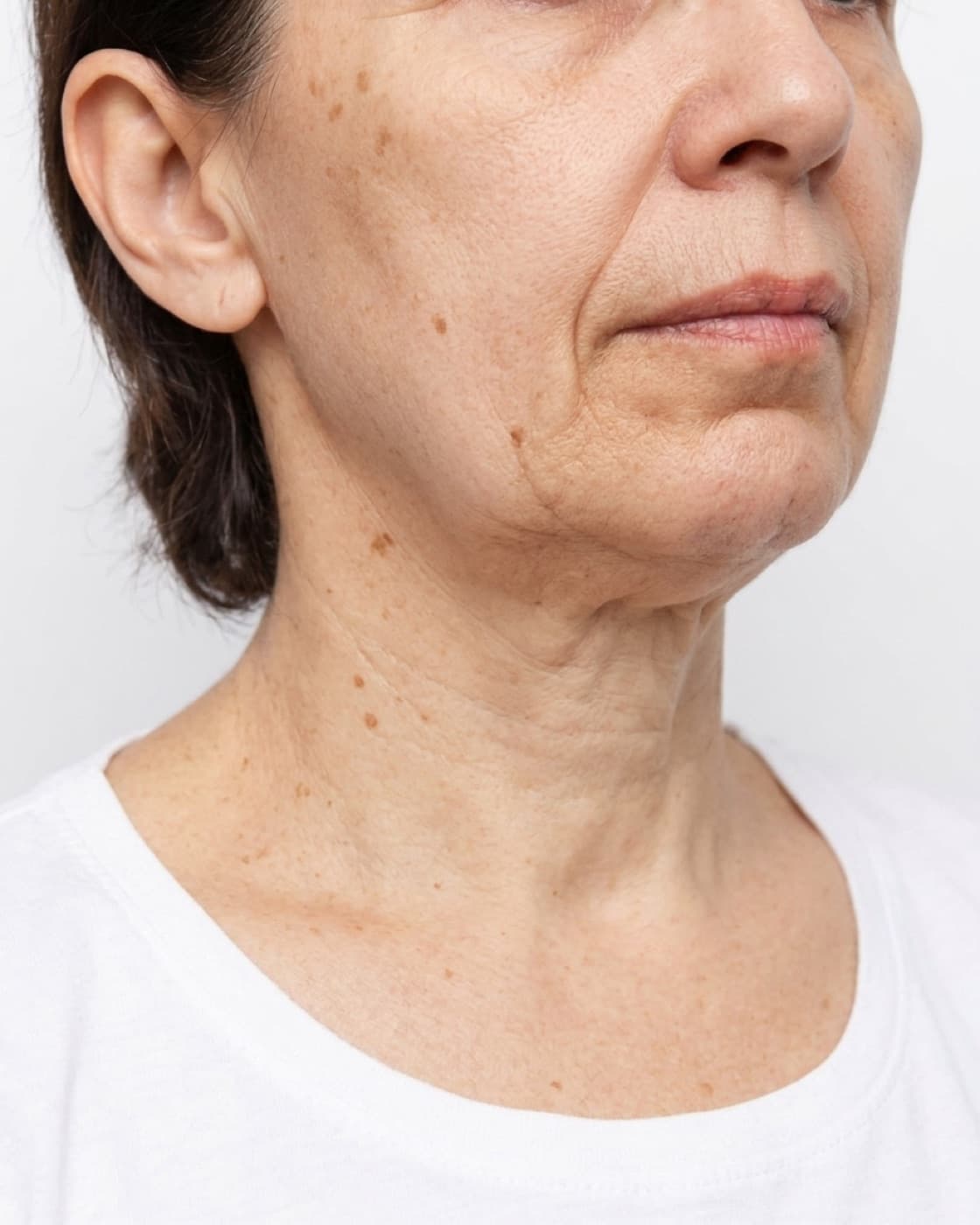
Why it happens
The firmness of the face depends on several layers: the skin, rich in collagen and elastin; the fat, distributed in compartments; the supporting layer called the SMAS (superficial musculoaponeurotic system); and the bones, which serve as the base. With aging, all these layers change at the same time: collagen decreases, bone is reabsorbed, fat shifts and ligaments loosen.
Sun exposure, smoking, genetics and weight fluctuations speed up this process.
How the evaluation is done
The dermatologist assesses the face from different angles, the quality and thickness of the skin, volume loss and the degree of tissue sagging. This analysis shows which layer contributes most to laxity in each case and guides the choice of treatments.
Recommended treatments
In mild to moderate cases, non-surgical treatments act on different layers and can be combined.
- Ultraformer® MPTMicrofocused ultrasound that acts on the SMAS, the supporting layer of the face.
- Collagen biostimulatorsGradual gain in skin firmness and thickness.
- Evolla® MPNeedle-free radiofrequency for firmness, with no downtime.
- Evolla® XLMicroneedling radiofrequency, when texture is also uneven.
- Harmonyca (hyaluronic acid and calcium hydroxylapatite)Support and volume with collagen stimulation.
- PDO threadsLifting threads to reposition the cheeks and contour.
Combined treatments
The most common combination pairs a technology that acts on support, such as Ultraformer®, with a biostimulator, which improves the skin, and targeted fillers when there is volume loss. The plan and the order of procedures are defined at the evaluation.
All procedures are recommended and performed after an individual medical evaluation. Results vary from person to person.
Questions
Frequently asked questions
At what age does laxity appear?
Collagen production starts to decrease around age 25 to 30, and the first signs of laxity usually appear between 35 and 45. The age varies with genetics, sun exposure and lifestyle.
Do non-surgical treatments replace a facelift?
No. They improve mild to moderate laxity, but they do not remove excess skin. In cases of marked laxity, plastic surgery tends to be more appropriate.
What is the best treatment for sagging facial skin?
There is no single best treatment for everyone. The choice depends on the main cause (skin, volume or support), age and skin quality, and technologies and injectables are often combined.
Does losing weight make laxity worse?
Large weight loss, especially when rapid, can leave the skin with less support and accentuate laxity. In these cases, treatments can be planned together with weight monitoring.
Team