
Concerns · Body
Cellulite: why it appears and which treatments work
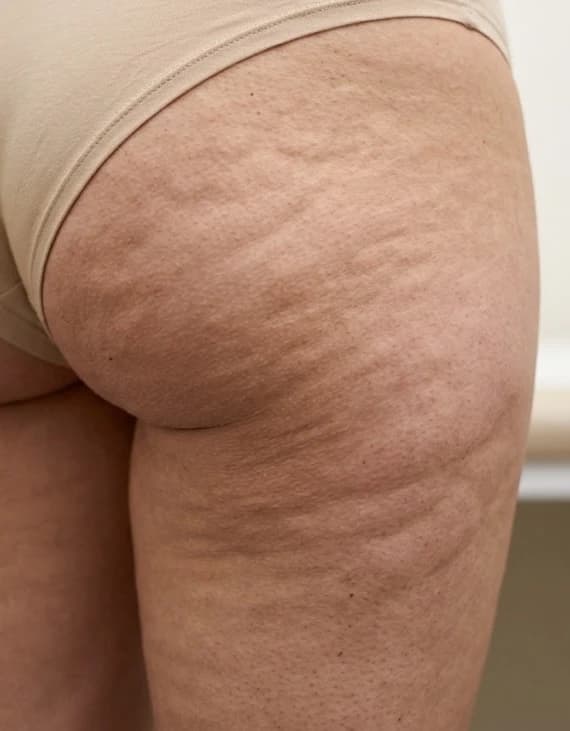
Cellulite is a change in the relief of the skin, with an orange-peel look or dimples, common on the buttocks and thighs. It results from a combination of fibers under the skin that pull the surface down, fat that pushes up, and laxity. It affects most women, due to hormonal and genetic factors, and treatment combines techniques for each component. At Yamagata Dermatologia, in Ipanema, Rio de Janeiro, the plan is defined by a dermatologist at the appointment.
Why it happens
Under the skin, there are fibrous bands that connect the skin to the deeper layers, forming compartments where fat sits. In women, these bands are vertical and parallel: when fat increases, it pushes the skin up between the bands, while the bands themselves pull the skin down. The result is the uneven relief of cellulite.
Female hormones, genetics, laxity, fluid retention, a sedentary lifestyle and weight fluctuations make it worse.
How the evaluation is done
The dermatologist examines the skin standing and lying down, with and without muscle contraction, and identifies what predominates: dimples, diffuse ripples, laxity or fat. This classification guides the choice and combination of treatments.
Recommended treatments
- SubcisionReleases the fibers that form the dimples.
- Body biostimulatorImproves skin firmness when laxity is present.
- Evolla® XLMicroneedling radiofrequency on the thighs and buttocks.
Combined treatments
The most common combination pairs subcision, which treats the dimples, with a body biostimulator, which improves skin firmness. Physical activity, weight control and good hydration complement the treatment.
All procedures are recommended and performed after an individual medical evaluation. Results vary from person to person.
Questions
Frequently asked questions
Can cellulite be cured?
Cellulite can improve a lot with treatment, but it tends to return over time, because it has hormonal and genetic causes. Healthy habits and maintenance sessions help preserve the result.
Do thin people get cellulite?
Yes. Cellulite depends mainly on the structure of the fibers under the skin and on hormonal factors, not only on the amount of fat.
Do cellulite creams work?
Some creams slightly improve the appearance of the skin, but they do not treat the causes of cellulite. Procedures act more effectively on each component.
What is the best treatment for cellulite?
It depends on the predominant type: dimples respond to subcision; laxity, to biostimulators; and the fat component, to technologies. Treatments are often combined.
Team
Medical team
See also