
05 · Lasers and light
Acroma® laser (Q-switched Nd:YAG): dark spots, dark circles and tattoos
The Acroma® laser is a Q-switched Nd:YAG laser: it emits extremely short pulses of energy that break up the pigment of dark spots and tattoo ink into smaller particles, which are then eliminated by the body. It is used for sun spots and darkened skin, such as dark circles, underarms and groin, as support in melasma treatment and for tattoo removal. At Yamagata Dermatologia, in Ipanema, Rio de Janeiro, it is performed by dermatologists after a medical evaluation.
- Duration
- About 1 hour
- Anesthesia
- Usually not needed
- Recovery
- Mild redness for a few hours
- Result
- Progressive, over the sessions
How it works
A Q-switched laser emits pulses of energy that last billionths of a second. In such a short time, the pigment absorbs the energy and breaks apart by a mechanical (photoacoustic) effect before the heat spreads to the surrounding skin. The smaller particles of pigment or ink are then removed by the body's defense cells.
The device works with two wavelengths: a deeper one, used for pigment in the dermis and dark inks, and a more superficial one, used for spots in the epidermis and some tattoo colors. At low energy, applied in several passes over the skin, it is used as support to lighten melasma and diffuse darkening.
Indications
- Dark spots and melasmaSun spots, solar lentigines and support in melasma treatment.
- Dark circlesDark circles with darkened skin.
- Dark spots on the bodyDarkening of the underarms, groin, hands and other areas.
- Tattoo removalLightening and removal of tattoos.
Treated areas
FaceFace · Solar lentigines (sun spots) · Dark circles
BodyUnderarms · Groin · Arms · Hands · Legs · Abdomen · Back
Other indicationsDarkened scars · Tattoos
What a session is like
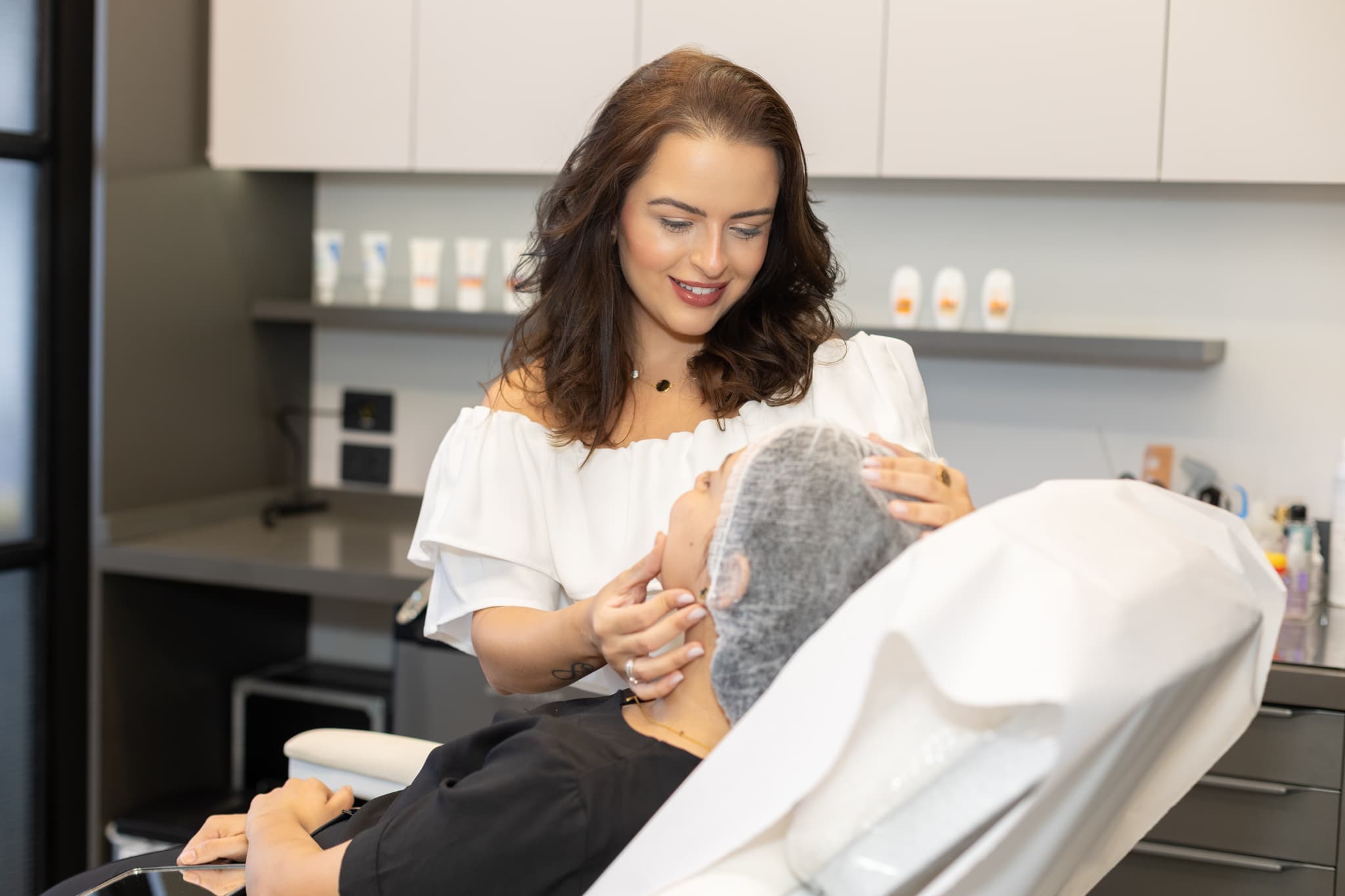
The skin is cleaned, and the patient and team wear protective glasses. The doctor passes the handpiece over the area, with settings chosen for the type of spot and skin. The sensation is of small snaps. Anesthesia is usually not needed. A session lasts about 1 hour.
Recovery
The skin may be red for a few hours. With sun spots, the treated area darkens and forms a thin crust, which comes off within a few days.
Sessions and results
The number of sessions and the interval between them depend on the dermatologist's individual evaluation and on each patient's clinical concern. Lightening is progressive, and the response varies according to the type of spot and skin.
Contraindications
The Acroma® laser is not recommended during pregnancy, over tanned skin, wounds or active infections, or for people with diseases that cause light sensitivity or who take photosensitizing medications. Pigmented lesions of uncertain diagnosis must be evaluated first, with dermoscopy, and not treated with laser.
At the evaluation, the dermatologist reviews your health history, current medications and previous procedures to confirm the indication.
All procedures are recommended and performed after an individual medical evaluation. Results vary from person to person.
Questions
Frequently asked questions
Does the Acroma® laser treat melasma?
It can help as part of the treatment. Melasma is a chronic condition, treated mainly with sun protection, medications and creams. Low-energy Q-switched laser can lighten the patch, with careful settings and follow-up by the dermatologist.
Does the Acroma® laser hurt?
The sensation is of small snaps or pricks on the skin, well tolerated in most areas. For tattoos or more sensitive areas, a numbing cream may be used.
Does the spot get darker before it lightens?
With sun spots, it is common for the treated area to become darker for a few days and then peel, revealing lighter skin. This darkening is part of the process.
Can people with darker skin have it?
Low-energy Q-switched laser can be used on darker skin, but it requires assessment of the phototype and careful adjustment of the settings.
Team