05 · Lasers and light
Etherea®: laser and light platform for dark spots, spider veins and texture
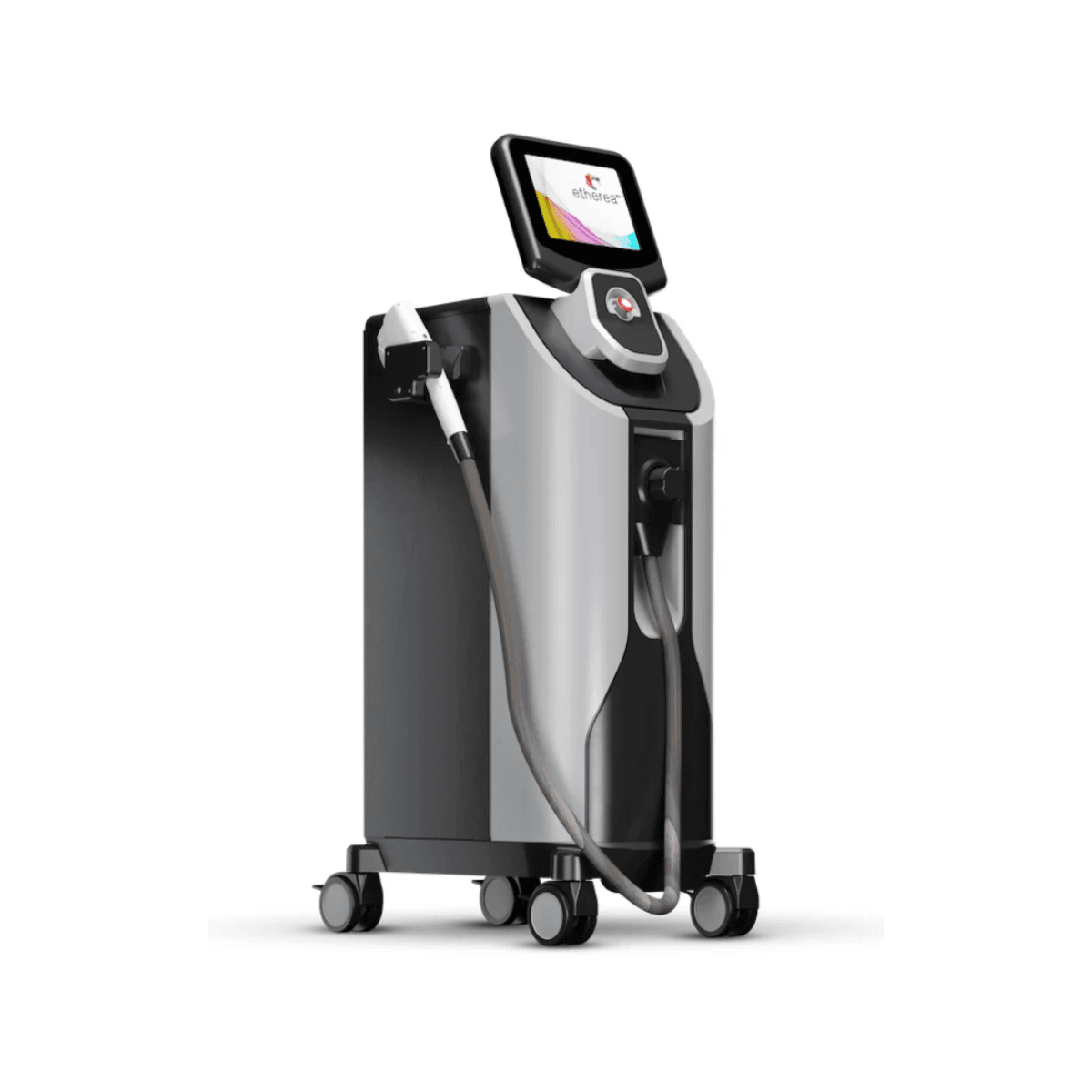
Etherea® is the clinic's laser and light platform: a single device with different handpieces for intense pulsed light, erbium laser and Q-switched laser (Acroma®). They are used to treat sun spots, melasma, spider veins, redness, acne scars, stretch marks, fine wrinkles, uneven texture and tattoos, alone or combined in the same session. At Yamagata Dermatologia, in Ipanema, Rio de Janeiro, treatments are performed by dermatologists after a medical evaluation.
- Technologies
- Intense pulsed light, erbium laser and Q-switched laser
- Duration
- About 1 hour
- Recovery
- Varies with the technology
- Care
- Strict sun protection
How it works
Lasers and lights share a common principle: light energy is absorbed by a specific target in the skin and turned into heat or a very fast mechanical impact. The target changes with the wavelength: the pigment of dark spots (melanin), the hemoglobin of spider veins, the water in skin cells or the ink of a tattoo.
Etherea® combines, in the same device, three technologies with different targets:
- Intense pulsed light: light with multiple wavelengths, filtered to act on the pigment of sun spots and the hemoglobin of spider veins.
- Erbium laser: acts on the water in the skin, renewing the superficial layers and stimulating collagen, for texture, fine wrinkles, scars and stretch marks.
- Acroma® laser, a Q-switched Nd:YAG laser: extremely short pulses break up the pigment of dark spots and tattoo ink, with little heating of the surrounding skin.
Because the technologies are on the same platform, combined protocols can be built, treating, for example, dark spots and texture in the same plan.
Indications
- Dark spots and melasmaSun spots, freckles, melasma and hyperpigmentation.
- Redness and spider veinsFacial spider veins and rosacea redness.
- Acne scarsScars and uneven texture.
- Stretch marksStretch marks on the abdomen, flanks and other areas.
- Dull skin, texture and poresFine wrinkles, pores and dull skin.
- Tattoo removalLightening and removal of tattoos.
Treated areas
Intense pulsed lightFace · Neck · Décolletage · Back · Hands · Arms and forearms
Erbium laserFace · Eyelids · Perioral area · Neck · Décolletage · Stretch marks · Scars
Acroma® laserFace · Dark circles · Underarms · Groin · Hands · Tattoos
What a session is like
The skin is cleaned, and the patient and team wear protective glasses. The doctor adjusts the settings of the chosen handpiece according to the area, skin type and concern. The sensation ranges from heat to slight snaps on the skin; when indicated, a numbing cream is applied beforehand. A session lasts about 1 hour.
Recovery
Recovery depends on the technology: with intense pulsed light and the Acroma® laser, there is mild redness and, on treated spots, temporary darkening; with the erbium laser, the skin is red and peels for a few days. In all cases, daily sun protection and avoiding tanning are essential.
Sessions and results
The number of sessions and the interval between them depend on the dermatologist's individual evaluation and on each patient's clinical concern. The result is progressive and varies from person to person.
Contraindications
Laser and light treatments are not recommended during pregnancy, over tanned skin, wounds or active infections, for people with diseases that cause light sensitivity, or for those taking photosensitizing medications. Recent use of isotretinoin and a tendency to keloids require evaluation.
At the evaluation, the dermatologist reviews your health history, current medications and previous procedures to confirm the indication.
All procedures are recommended and performed after an individual medical evaluation. Results vary from person to person.
Questions
Frequently asked questions
Which Etherea® technology is right for me?
It depends on the concern, the skin type and the time of year. Intense pulsed light is used mainly for sun spots and spider veins; the erbium laser for texture, fine wrinkles, scars and stretch marks; the Acroma® laser for dark spots, melasma, dark circles and tattoos. The choice is made at the evaluation, and the technologies can be combined.
Can I have laser treatments in the summer?
Some technologies can be used in the summer with extra care, and others are preferably done in the months with less sun exposure. Tanned skin requires extra care, and sun protection is essential before and after the sessions.
Does laser treat melasma?
Laser can help with melasma, but it is not the main treatment. Melasma is a chronic condition, treated with sun protection, medications and creams, and laser, when indicated, is used with careful settings and follow-up by the dermatologist.
Can people with darker skin have laser treatments?
Some technologies, such as low-energy Q-switched laser, are suitable for darker skin. Others, such as intense pulsed light, require caution. The indication depends on the assessment of the skin phototype (skin color and how it reacts to the sun).
Team