
Concerns · Hair
Hair loss: causes, diagnosis and treatment
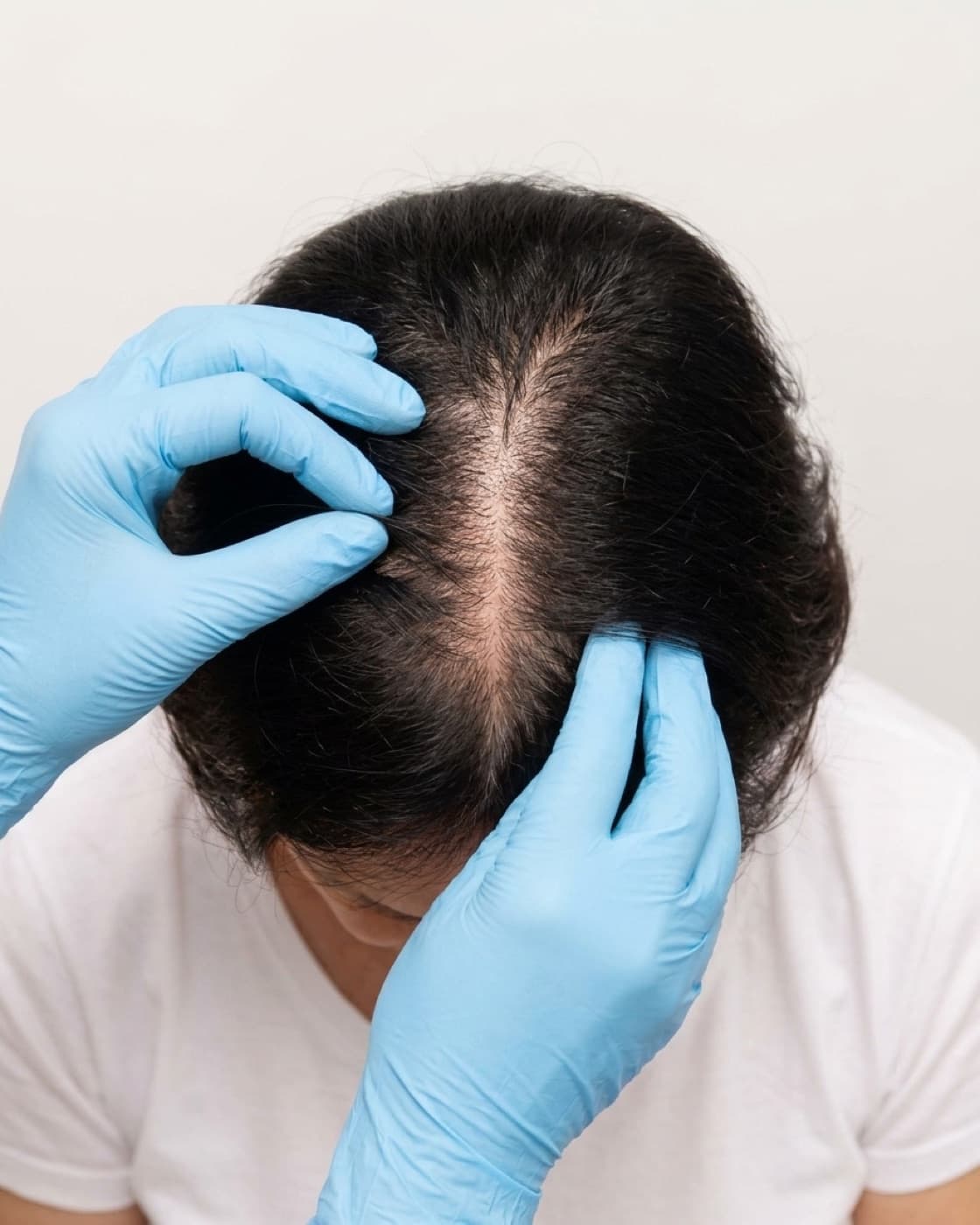
Losing up to about 100 hairs a day is normal. Hair loss beyond that can have many causes: stress, illness, postpartum, diets and nutritional deficiencies (telogen effluvium), hormonal and genetic changes (pattern baldness or androgenetic alopecia), autoimmune diseases (alopecia areata) and scalp inflammation. Treatment starts with diagnosing the cause, with a clinical examination, trichoscopy and blood tests. At Yamagata Dermatologia, in Ipanema, Rio de Janeiro, the diagnosis is made by a dermatologist at the appointment.
Why it happens
Each hair goes through a cycle of growth, rest and shedding. Hair loss increases when many hairs enter the shedding phase at the same time or when the follicles produce increasingly finer hairs. The most common causes are:
- Telogen effluvium: diffuse shedding, a few months after stress, illness, fever, surgery, childbirth, a restrictive diet or a nutritional deficiency.
- Androgenetic alopecia (pattern baldness): progressive thinning of the hair, due to genetic inheritance and hormonal action.
- Alopecia areata: round bald patches caused by the immune system.
- Thyroid changes, anemia and medications.
- Scalp inflammation and scarring alopecia.
How the evaluation is done
The dermatologist investigates the history of the hair loss, habits, medications and associated diseases, examines the scalp with digital trichoscopy and, when necessary, orders blood tests. In some cases, a scalp biopsy is indicated.
Recommended treatments
Treatment depends on the cause and usually combines oral or topical medications with in-office procedures.
- Digital trichoscopyExamination of the scalp and hair to identify the cause of hair loss.
- Hair MMPMedication delivered to the scalp in areas of hair loss and thinning.
- Hair mesotherapyMicro-injections of active ingredients that stimulate the hair cycle.
- Scalp microneedlingScalp stimulation and absorption of active ingredients.
- Capellux®Hair LED therapy as a complement to treatment.
- Intralesional injectionAlopecia areata patches and inflamed areas.
Combined treatments
Procedures such as hair MMP, mesotherapy and LED therapy complement treatment with medications. Correcting deficiencies and controlling factors such as stress and thyroid disease are part of the plan.
All procedures are recommended and performed after an individual medical evaluation. Results vary from person to person.
Questions
Frequently asked questions
How many hairs is it normal to lose per day?
It is normal to lose up to about 100 hairs a day, on average. More important than counting hairs is noticing changes: more hair falling in the shower and on the brush, thinner hair or a more visible scalp.
Can hair loss be cured?
It depends on the cause. Telogen effluvium usually improves once the cause is corrected; pattern baldness can be controlled with ongoing treatment; and other forms of alopecia require specific follow-up.
Do vitamins stop hair loss?
Only when there is a proven deficiency, such as iron, vitamin D or zinc. Supplementing without need does not treat hair loss and can be harmful.
When should I see a dermatologist?
When hair loss lasts more than three months, there are bald patches, itching, pain or flaking on the scalp, or the hair is visibly thinner.
Is hair loss after childbirth normal?
Yes. It is common for hair loss to increase two to four months after giving birth, which usually improves on its own within a few months. The evaluation helps rule out other associated causes.
Team