
Medical and surgical procedures
Intralesional injection: medication applied into the lesion
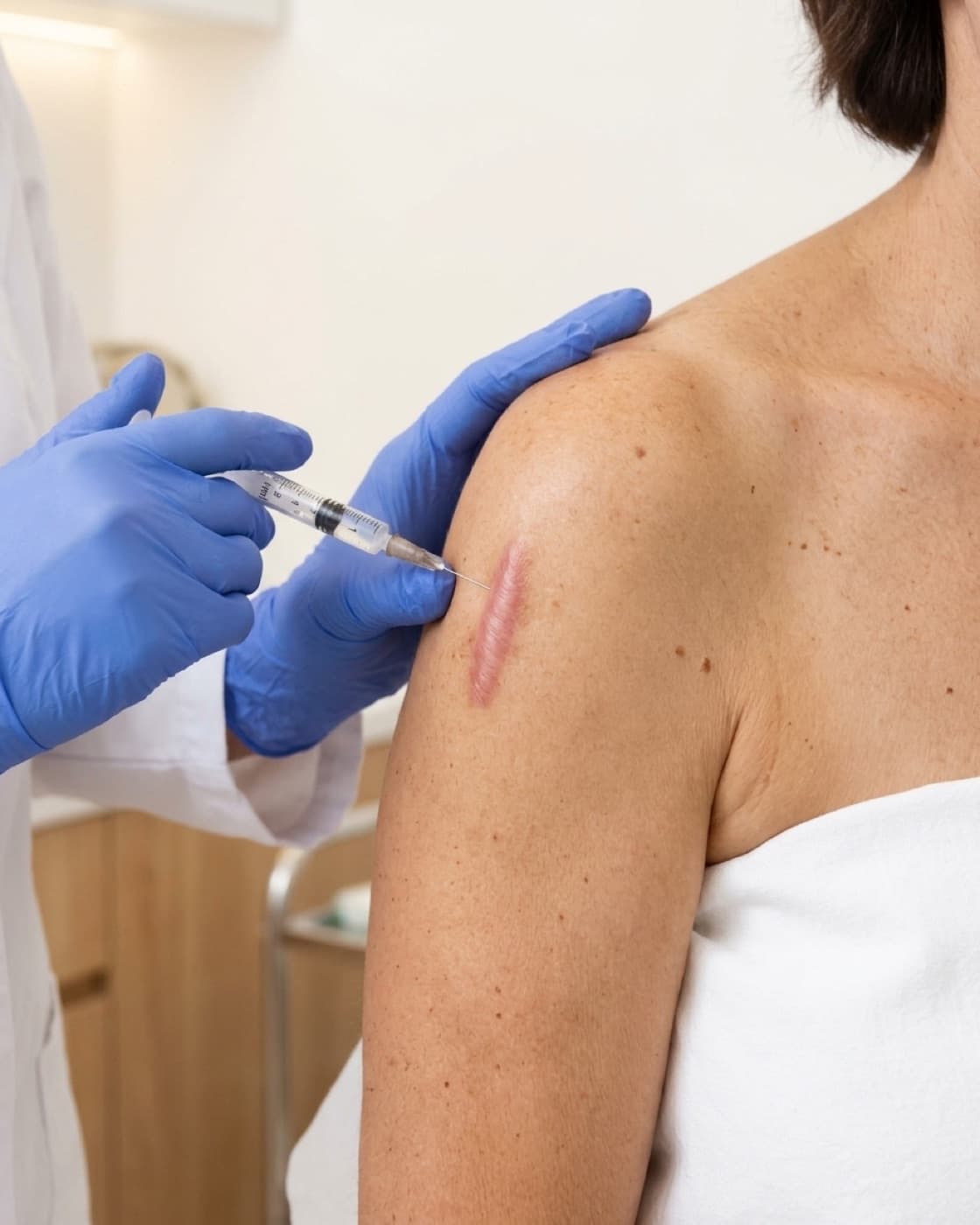
Intralesional injection is the application of a medication, usually a corticosteroid, directly into a skin or scalp lesion, with a fine needle. Because the medication acts locally, the dose is small and the effect on the rest of the body is minimal. It is used for keloids and raised scars, alopecia areata, inflamed cysts and other inflammatory lesions. At Yamagata Dermatologia, in Ipanema, Rio de Janeiro, it is performed by dermatologists after a medical evaluation.
- Duration
- About 1 hour
- Anesthesia
- Usually not needed
- Recovery
- No downtime
- Medication
- Usually a corticosteroid
How it works
In inflammatory lesions or those with excess scar tissue, medication applied directly into the lesion reaches a high local concentration with a small total dose. The corticosteroid reduces inflammation, itching and pain and, in keloids, decreases the excess collagen production, which flattens the scar.
In alopecia areata, the medication reduces the inflammation around the follicles, allowing hair to grow back in the patches.
Indications
- Keloids and hypertrophic scarsRaised scars that itch or hurt.
- Alopecia areataRound bald patches on the scalp, beard or eyebrows.
- Scarring alopeciaControl of inflammation in active areas.
- AcneInflamed, painful nodules and cysts.
Lesions treated
Lesions treatedKeloids and hypertrophic scars · Alopecia areata · Scarring alopecia · Inflamed acne cysts and nodules · Localized psoriasis plaques and other skin conditions
What a session is like
The doctor assesses the lesion and defines the medication and concentration. After the skin is cleaned, small amounts are applied with a fine needle at one or more points of the lesion. A session lasts about 1 hour.
Recovery
You can return to your activities right after the injection. There may be mild pain, a small bruise or bleeding at the needle site.
Sessions and results
The number of sessions and the interval between them depend on the dermatologist's individual evaluation and on each patient's clinical concern. The improvement is progressive and varies with the type of lesion.
Contraindications
The injection is not recommended over active infections in the area or for people allergic to the medication. Uncontrolled diabetes and pregnancy require evaluation.
At the evaluation, the dermatologist reviews your health history, current medications and previous procedures to confirm the indication.
All procedures are recommended and performed after an individual medical evaluation. Results vary from person to person.
Questions
Frequently asked questions
Is a corticosteroid injection harmful?
Because the dose is small and applied locally, the effect on the rest of the body is minimal, and the treatment is monitored by the doctor at each session.
Does the injection get rid of a keloid?
The injection reduces the height, itching and pain of a keloid and is usually done over several sessions. In many cases, it is combined with other treatments, such as surgery and compression, to reduce the risk of recurrence.
Does it hurt?
The injection causes brief pain, which varies with the area and type of lesion. Firm keloids may be more sensitive; when needed, an anesthetic can be used.
Team