
Medical dermatology · Skin conditions
Atopic dermatitis (atopic eczema): symptoms and treatment
Atopic dermatitis, or atopic eczema, is a chronic inflammatory skin disease that causes dryness, intense itching and red lesions, which come in flares. It is more common in childhood, but can continue or appear in adulthood, and is associated with rhinitis and asthma. It involves a defect in the skin barrier and an exaggerated immune response. Treatment combines moisturizing, control of inflammation and, in severe cases, systemic medications and biologics. At Yamagata Dermatologia, in Ipanema, Rio de Janeiro, diagnosis and treatment are carried out by dermatologists.
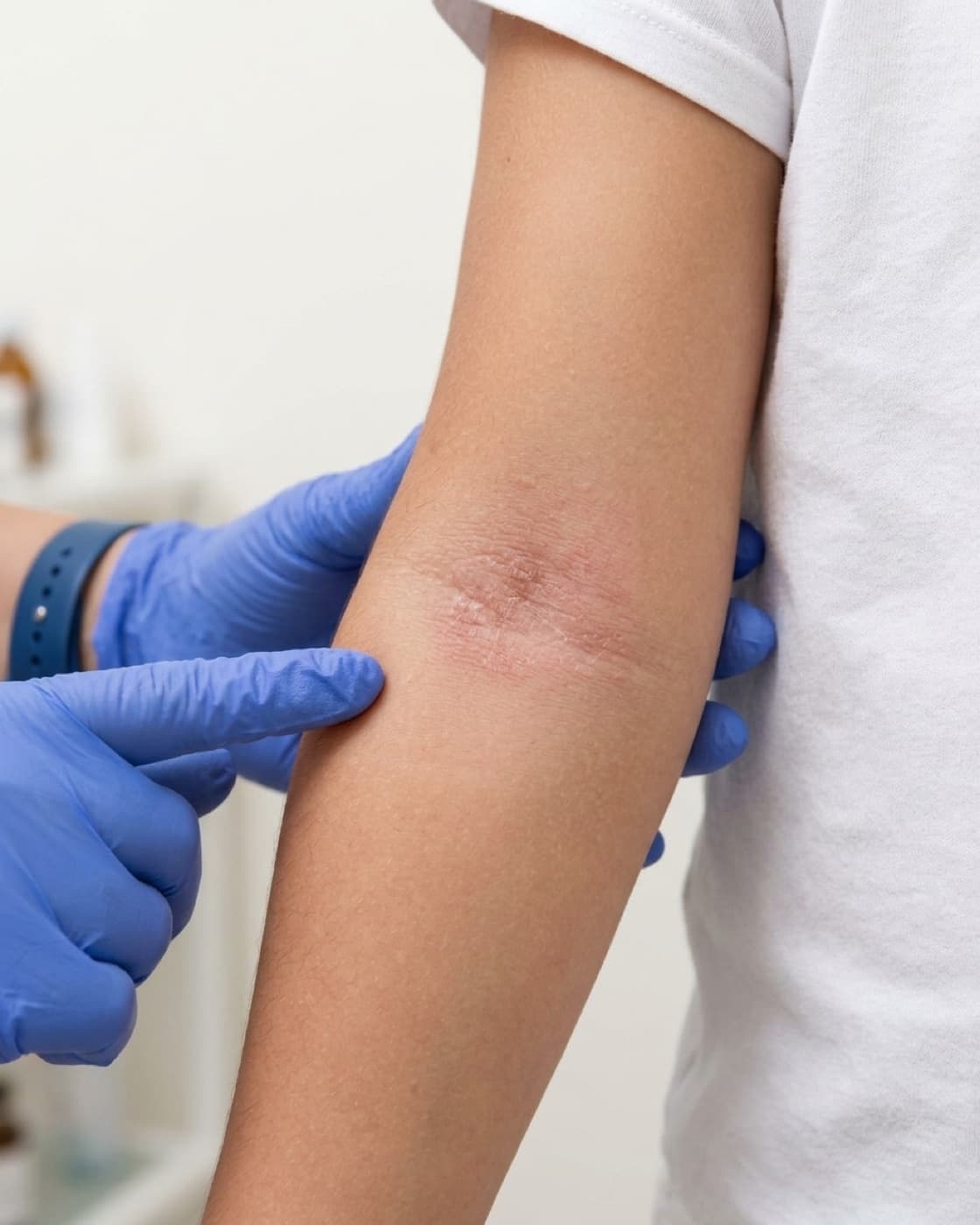
Symptoms and how to recognize it
Symptoms vary with age: in babies, lesions appear mostly on the face and the outer arms and legs; in older children and adults, in the skin creases, on the neck, hands and around the eyes.
- Very dry, rough skin
- Intense itching, worse at night
- Red patches with flaking or crusts
- Lesions in the creases of the elbows and knees, on the neck and face
- Thickened skin in areas that are often scratched
Causes and risk factors
Atopic dermatitis results from a combination of genetic predisposition, changes in the skin barrier, which loses water easily and lets irritants and allergens in, and an exaggerated immune response. It is more common in people with a personal or family history of rhinitis, asthma or dermatitis. Dry weather, sweat, synthetic fabrics, harsh soaps, dust mites, stress and infections worsen flares.
Diagnosis
Diagnosis is clinical, made by the dermatologist based on the symptoms, the distribution of the lesions and the history. Allergy tests may be ordered in specific cases.
Treatments
Treatment is ongoing and adjusted to the phase of the disease: daily moisturizing always, anti-inflammatories during flares and, in severe cases, systemic medications.
- Daily moisturizingMoisturizers and emollients that repair the skin barrier, the basis of all treatment.
- Topical anti-inflammatoriesTopical corticosteroids and immunomodulators during flares and for maintenance.
- Oral medicationsIn moderate to severe cases, depending on the evaluation.
- Biologic therapyModerate to severe atopic dermatitis, with control of itching and lesions.
Living with it and prevention
- Moisturize the skin at least twice a day, even without a flare.
- Take short, lukewarm showers with a gentle cleanser.
- Prefer cotton clothing and avoid rough fabrics.
- Keep nails short to reduce lesions caused by scratching.
- Identify and avoid your own triggers.
When to see a dermatologist
See a dermatologist when the skin is very dry or persistently itchy, when lesions do not improve with moisturizing, when there are signs of infection (yellowish crusts, discharge) or when itching disrupts sleep.
All procedures are recommended and performed after an individual medical evaluation. Results vary from person to person.
Questions
Frequently asked questions
Is atopic dermatitis contagious?
No. Atopic dermatitis is not contagious.
Can atopic dermatitis be cured?
There is no cure, but it can be controlled, and many children improve as they grow. Ongoing treatment reduces the frequency and intensity of flares.
Do foods cause atopic dermatitis?
In some children, food allergies can worsen the disease, but restrictive diets without medical confirmation are not recommended, because they can harm nutrition.
Do hot showers make it worse?
Yes. Long, hot showers remove the skin's natural oils. Ideally, take short, lukewarm showers with a gentle cleanser and moisturize right afterwards.
Team
Medical team
See also