
Medical dermatology · Skin conditions
Urticaria (hives): itchy red welts, causes and treatment
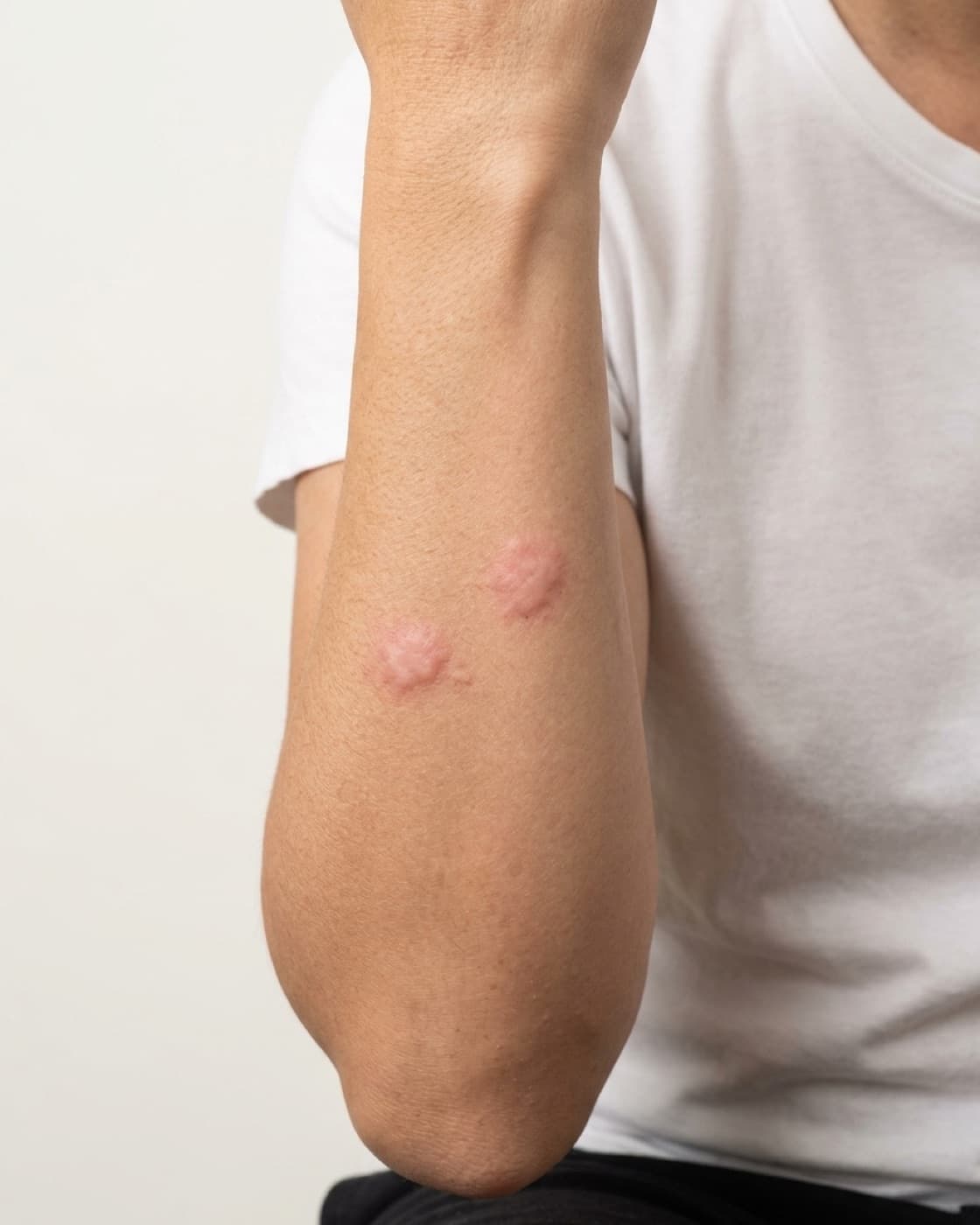
Urticaria, or hives, is a skin reaction that causes raised, red and very itchy welts, which appear and disappear in less than 24 hours, moving around the body. It can come with swelling of the lips and eyelids (angioedema). It is acute when it lasts less than six weeks, usually due to infections, medications or foods, and chronic when it persists longer, often without an identifiable external cause. At Yamagata Dermatologia, in Ipanema, Rio de Janeiro, diagnosis and treatment are carried out by dermatologists.
Symptoms and how to recognize it
- Raised welts, red or skin-colored, with itching
- Lesions that move around and disappear in less than 24 hours
- Swelling of the lips, eyelids or hands (angioedema)
- Worsening with heat, pressure on the skin or stress, in some people
In rare cases, urticaria comes with swelling of the tongue or throat, difficulty breathing or dizziness. These signs require immediate care at an emergency service.
Causes and risk factors
Urticaria happens when immune cells in the skin, called mast cells, release histamine and other substances that cause swelling and itching. In the acute form, the most common triggers are viral infections, medications (such as anti-inflammatories and antibiotics) and foods. In the chronic form, in most cases the activation is spontaneous, linked to autoimmune mechanisms, and in some cases it is triggered by physical stimuli, such as pressure, cold, heat or friction.
Diagnosis
Diagnosis is clinical, based on the description and examination of the lesions. In chronic urticaria, blood tests may be ordered to investigate causes and associated diseases.
Treatments
- AntihistaminesThe basis of treatment, at doses adjusted by the doctor.
- Identifying triggersMedications, foods, infections and physical stimuli, when present.
- Biologic therapyChronic urticaria that does not respond to antihistamines.
Living with it and prevention
- Avoid identified triggers, such as specific medications.
- Take the antihistamine regularly, as prescribed, not just during flares.
- Avoid very hot showers and tight clothing, which can worsen the lesions.
When to see a dermatologist
See a dermatologist when urticaria lasts more than a few weeks, keeps coming back or does not improve with common antihistamines. If there is swelling of the tongue or shortness of breath, seek emergency care.
All procedures are recommended and performed after an individual medical evaluation. Results vary from person to person.
Questions
Frequently asked questions
Is urticaria an allergy?
Not always. Acute urticaria can be caused by an allergy to medications or foods, but chronic urticaria, in most cases, has no external allergic cause and is linked to the immune system itself.
Is urticaria something to worry about?
In the vast majority of cases, no: the welts are bothersome but disappear without leaving marks. Rarely, urticaria comes with swelling of the tongue or throat, shortness of breath or dizziness; in these cases, seek immediate care at an emergency service.
Can chronic urticaria be cured?
Chronic urticaria usually goes away on its own over time, in months or years. Meanwhile, treatment controls the symptoms in the vast majority of people.
Do I need tests?
For acute urticaria, usually not. For chronic urticaria, the doctor may order tests to investigate causes and associated diseases, such as thyroid disease.
Team
Medical team
See also