
Medical dermatology · Skin conditions
Vitiligo: white patches on the skin, causes and treatment
Vitiligo is an autoimmune disease in which the immune system destroys melanocytes, the cells that produce skin pigment. The result is well-defined white patches, which can appear anywhere on the body, often on the face, hands and around body openings. It is not contagious. Treatment aims to stop progression and stimulate repigmentation. At Yamagata Dermatologia, in Ipanema, Rio de Janeiro, diagnosis and treatment are carried out by dermatologists.
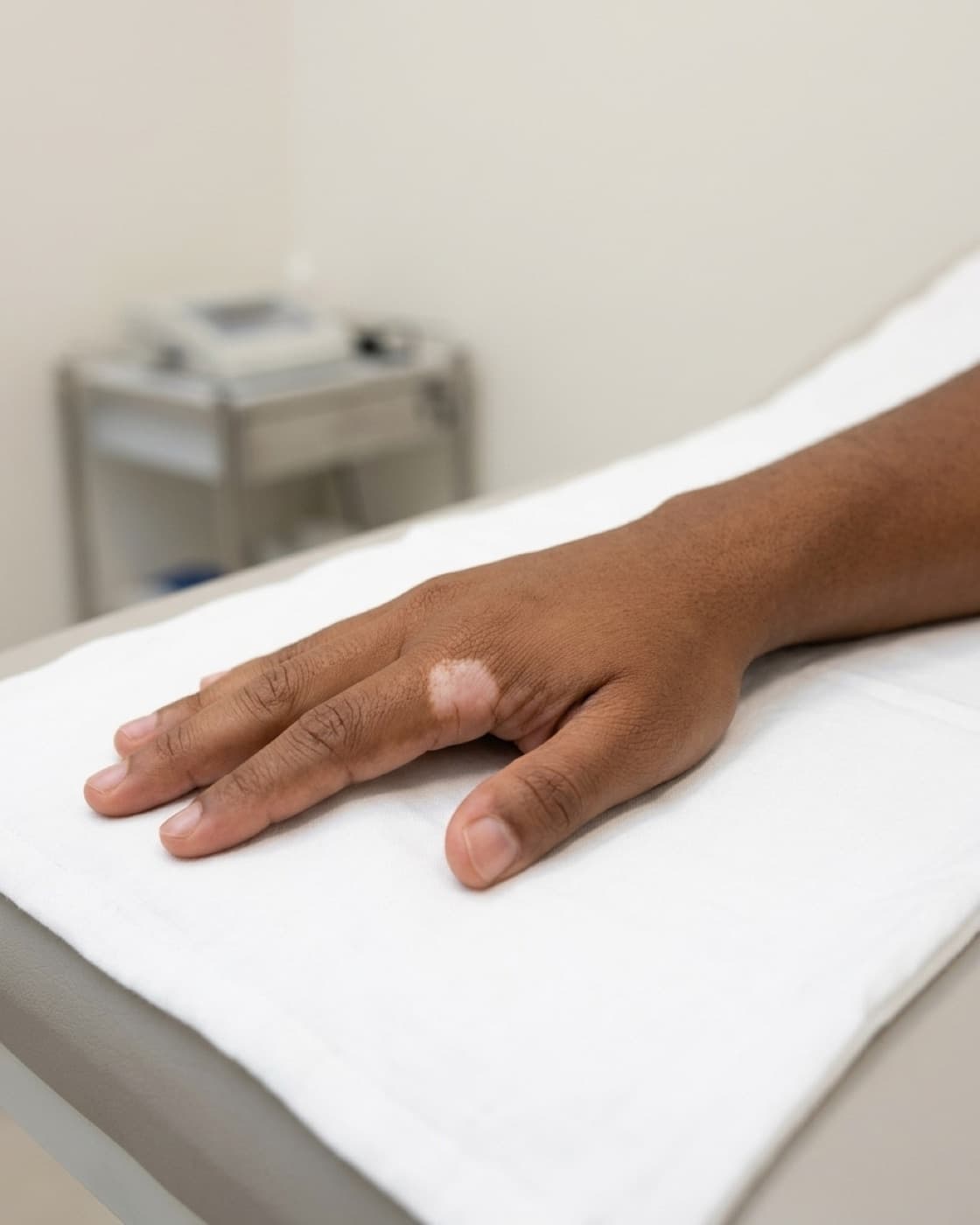
Symptoms and how to recognize it
- Well-defined white patches, without flaking
- Symmetrical distribution or on only one side of the body
- Common areas: face, around the eyes and mouth, hands, feet, underarms and genitals
- White hairs in the affected areas
- Appearance in areas of friction or injury
Vitiligo can be segmental, affecting only one side of the body, or non-segmental, the most common form, with symmetrical patches that can spread over time.
Causes and risk factors
Vitiligo results from an autoimmune reaction against melanocytes in people with a genetic predisposition. Intense stress, skin injuries and sunburn can trigger or worsen the patches. It is more frequent in people with a family history and with other autoimmune diseases.
Diagnosis
Diagnosis is clinical. The dermatologist examines the patches with Wood's light, which highlights areas without pigment, and with dermoscopy, which helps distinguish vitiligo from other light patches, such as those caused by fungal infections. Blood tests may be ordered to investigate thyroid disease.
Treatments
Treatment depends on the extent and activity of the disease and the areas affected.
- Topical medicationsTopical corticosteroids and immunomodulators, to control inflammation and stimulate repigmentation.
- PhototherapyControlled exposure to ultraviolet light, in specialized centers, in indicated cases.
- Oral medicationsIn progressing forms, depending on the evaluation.
Living with it and prevention
- Use sunscreen daily on the patches and the rest of the skin.
- Avoid injury and friction on the affected areas.
- Keep up follow-up appointments to adjust treatment as the disease evolves.
- Seek support when vitiligo affects your self-esteem.
When to see a dermatologist
See a dermatologist if you notice white patches that appear or grow, especially early on, when treatment tends to work best.
All procedures are recommended and performed after an individual medical evaluation. Results vary from person to person.
Questions
Frequently asked questions
Is vitiligo contagious?
No. Vitiligo is not contagious.
Can vitiligo be cured?
There is no definitive cure, but treatment can stabilize the disease and repigment part or all of the patches, especially on the face. The response varies from person to person.
Is vitiligo linked to other diseases?
People with vitiligo are more likely to have other autoimmune diseases, such as thyroid disease, which can be investigated with blood tests.
Do I need to be careful with the sun?
Yes. White patches have no pigment and burn easily. Sunscreen is essential, and sunburn can trigger new patches.
Team
Medical team
See also