
Medical dermatology · Skin cancer and moles
Skin cancer: types, warning signs and early diagnosis
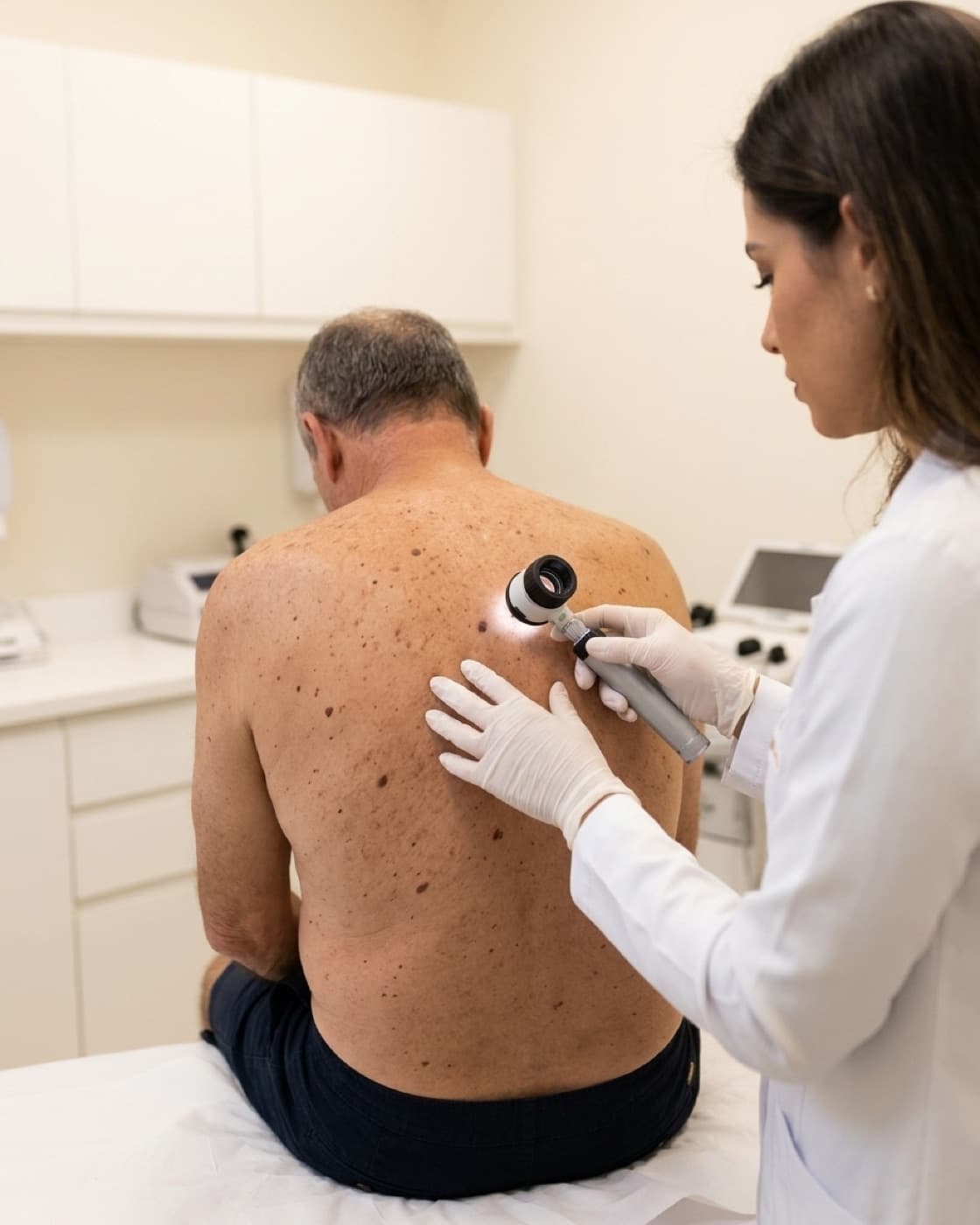
Skin cancer is the most frequent type of cancer in Brazil and arises mainly from sun exposure accumulated over a lifetime. The most common types are basal cell carcinoma and squamous cell carcinoma, which grow locally, and melanoma, less frequent and requiring closer attention. When diagnosed early, skin cancer has high chances of cure, which makes regular skin checks with a dermatologist important. At Yamagata Dermatologia, in Ipanema, Rio de Janeiro, skin checks, dermoscopy, total body mole mapping and surgery are carried out by dermatologists.
Symptoms and how to recognize it
Skin cancer can look very different from case to case. The most common warning signs are:
- A sore that does not heal or bleeds easily
- A pearly, shiny lesion or one with small vessels on the surface
- A rough, red or crusted lesion that grows
- A new mole or one that changes in size, color or shape
- A lesion that looks different from your other moles (the ugly duckling sign)
Types of skin cancer
- Basal cell carcinoma: the most common, slow-growing, rarely spreads to other organs, but can destroy neighboring tissue if left untreated.
- Squamous cell carcinoma: the second most common, it arises in areas of chronic sun damage and can spread if left untreated.
- Melanoma: less frequent and requiring closer attention, because it can spread when not treated early; found early, it has high chances of cure.
Causes and risk factors
The main cause is ultraviolet radiation from the sun and tanning beds, which damages the DNA of skin cells. Fair skin, a history of sunburn, accumulated sun exposure, many moles, a family history and low immunity increase the risk.
Diagnosis
Diagnosis begins with a skin examination by the dermatologist, supported by dermoscopy. In people with many moles or higher risk, total body mole mapping with FotoFinder® allows lesions to be compared over time. Confirmation is made by biopsy, with pathology.
Treatments
Treatment depends on the type, size and location of the tumor. In most cases, it is surgical and done in the office.
- Dermatologic surgeryRemoval of the tumor with a safety margin and analysis of the tissue.
- Cryotherapy and topical treatmentsFor superficial and precancerous lesions, such as actinic keratosis.
- Oncological treatmentIn advanced cases, together with other specialties.
Living with it and prevention
- Use sunscreen daily and reapply it throughout the day.
- Avoid the sun between 10 am and 4 pm and wear a hat, sunglasses and protective clothing.
- Do not use tanning beds.
- Examine your skin once a month.
- Keep up regular dermatology appointments.
When to see a dermatologist
See a dermatologist if you notice a sore that does not heal, a lesion that bleeds, grows or changes in appearance, or a new mole or one that looks different from the others.
All procedures are recommended and performed after an individual medical evaluation. Results vary from person to person.
Questions
Frequently asked questions
Can skin cancer be cured?
In the vast majority of cases, yes, especially when diagnosed early. Basal cell and squamous cell carcinomas are usually cured with surgical removal, and early melanoma also has high chances of cure.
Who is at higher risk?
People with fair skin, eyes and hair, a history of sunburn, intense sun exposure over their lifetime, many moles, a personal or family history of skin cancer and low immunity.
How often should I have my skin checked?
Monthly self-examination helps you notice changes. How often to see a dermatologist depends on each person's risk, usually at least once a year for those with risk factors.
Does sunscreen prevent skin cancer?
Regular use of sunscreen, combined with a hat, clothing and sunglasses and avoiding the sun between 10 am and 4 pm, reduces the risk of skin cancer.
Team
Medical team
See also