
Medical dermatology · Skin cancer and moles
Basal cell carcinoma: the most common skin cancer
Basal cell carcinoma is the most common type of skin cancer. It appears mainly in sun-exposed areas, such as the face, ears and neck, and grows slowly. It rarely spreads to other organs, but, if left untreated, it can destroy the surrounding tissue. With complete surgical removal, the chances of cure are very high. At Yamagata Dermatologia, in Ipanema, Rio de Janeiro, diagnosis and surgery are carried out by dermatologists.
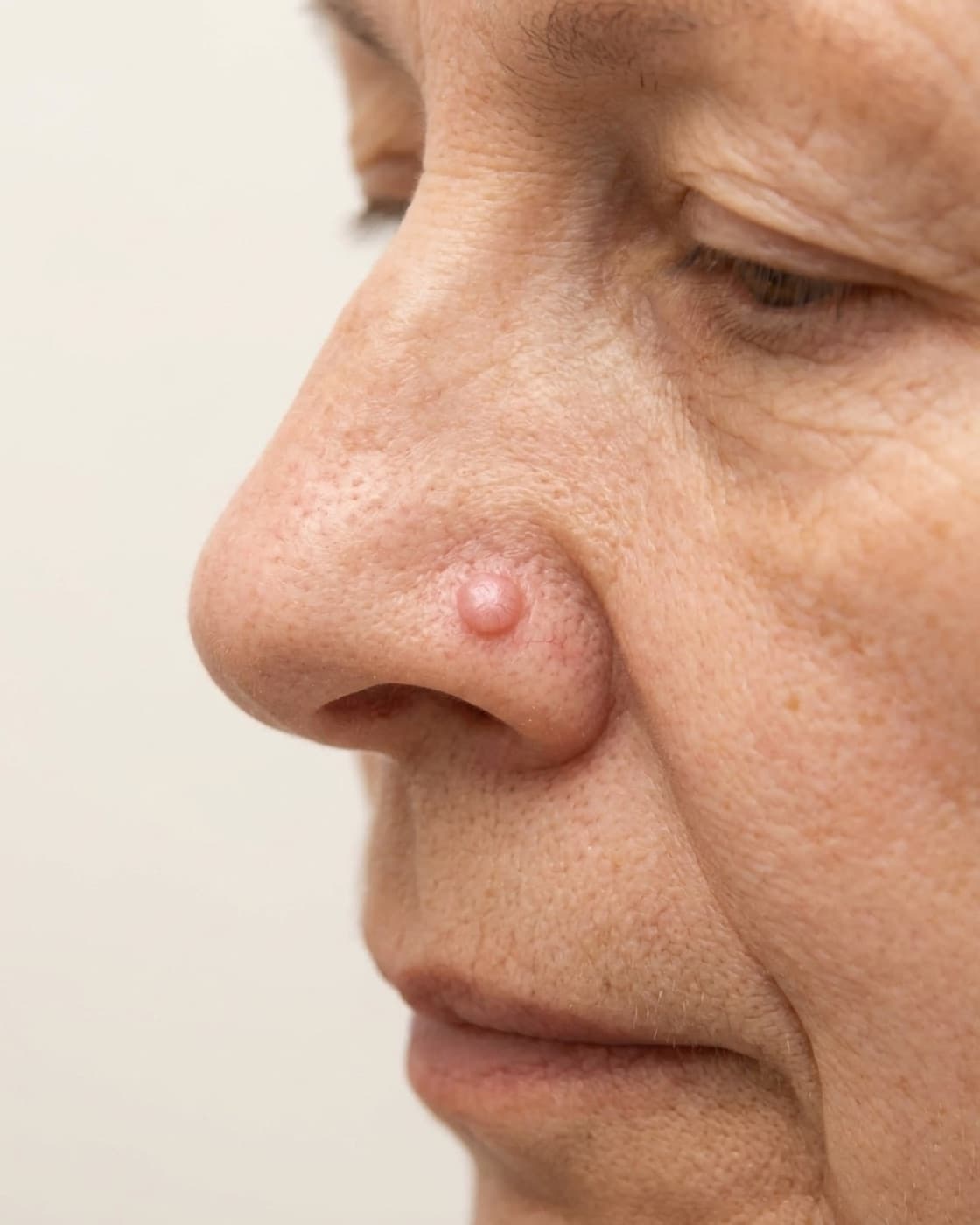
Symptoms and how to recognize it
- A pearly or shiny lesion with small vessels on the surface
- A sore that does not heal or that bleeds and crusts repeatedly
- A red, scaly patch on the torso (superficial form)
- A hardened, scar-like area with no apparent cause
Causes and risk factors
The main cause is sun exposure accumulated over a lifetime. Risk factors include fair skin, age over 50, a history of skin cancer, radiation exposure and low immunity.
Diagnosis
The dermatologist examines the lesion with dermoscopy, which shows structures typical of basal cell carcinoma. Confirmation is made by biopsy or removal of the lesion, with pathology.
Treatments
- Dermatologic surgeryRemoval of the tumor with a safety margin, the treatment of choice.
- Topical treatments and other techniquesFor superficial and selected tumors, depending on the evaluation.
Living with it and prevention
- Use sunscreen daily and physical protection (hat, clothing).
- Examine your skin and keep up regular appointments, especially after a first carcinoma.
When to see a dermatologist
See a dermatologist if you notice a sore that has not healed within a few weeks, a shiny or pearly lesion that grows, or a lesion that bleeds easily.
All procedures are recommended and performed after an individual medical evaluation. Results vary from person to person.
Questions
Frequently asked questions
Can basal cell carcinoma be cured?
Yes. It is a slow-growing cancer that rarely spreads to other organs, and treatment done early has high chances of cure. Without treatment, it can grow and affect the surrounding tissue, so it is best treated as soon as it is diagnosed.
Can it come back after surgery?
When removal is complete, with clear margins, the risk of recurrence is low. People who have had one carcinoma are more likely to develop others, so follow-up is important.
What is surgery on the face like?
It is done in the office under local anesthesia, and the closure is planned to preserve function and make the scar as discreet as possible, with reconstruction techniques when needed.
Who is at higher risk?
People with fair skin, a lot of sun exposure over their lifetime, age over 50 and a history of skin cancer.
Team
Medical team
See also