
Medical dermatology · Skin cancer and moles
Actinic keratosis: rough lesions caused by the sun
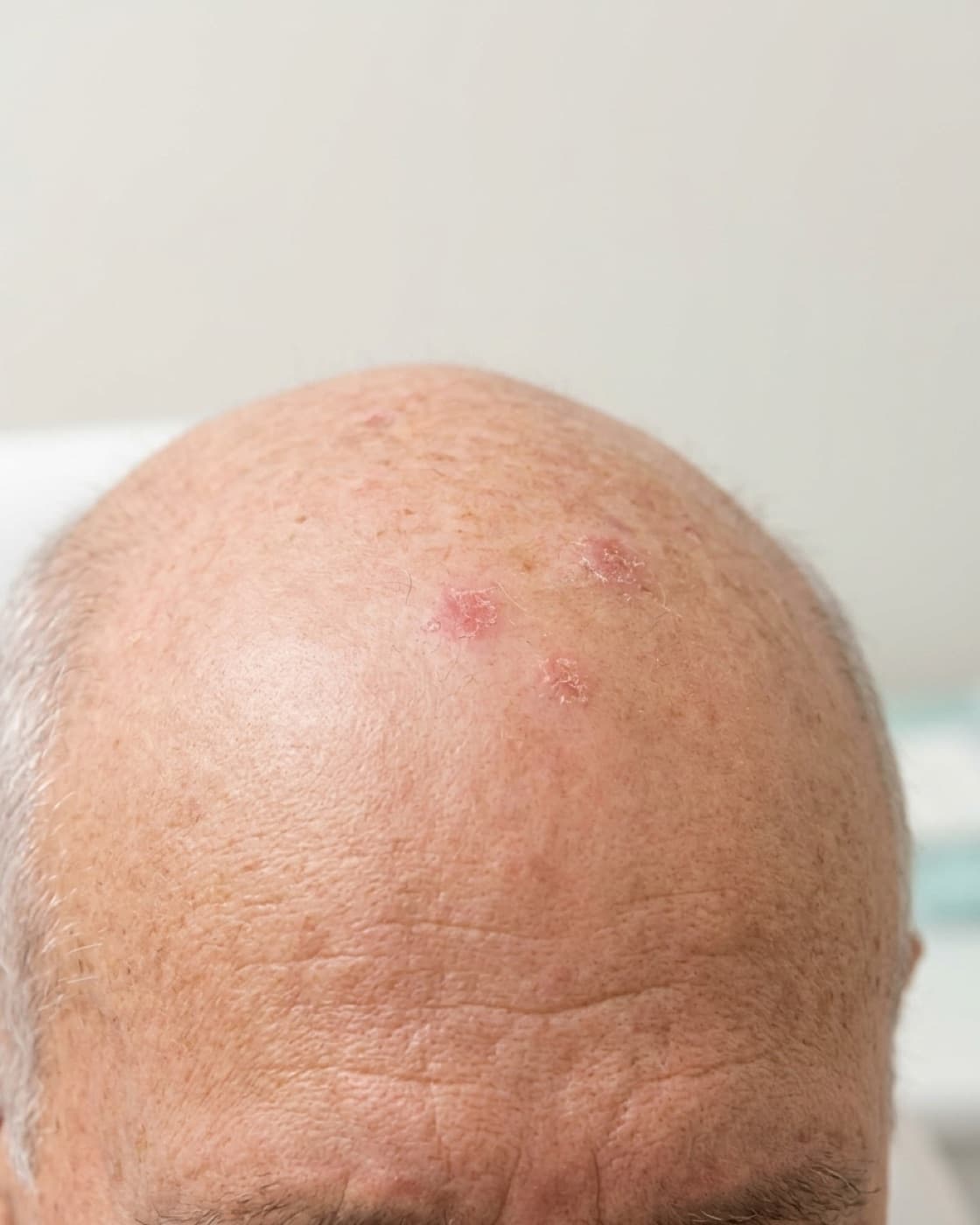
Actinic keratosis is a precancerous lesion caused by accumulated sun damage, which appears as a rough, scaly, red area, easier to feel than to see. It appears on exposed areas, such as the face, ears, bald scalp, back of the hands and forearms. Some can progress to squamous cell carcinoma, so they should be treated and monitored. At Yamagata Dermatologia, in Ipanema, Rio de Janeiro, diagnosis and treatment are carried out by dermatologists.
Symptoms and how to recognize it
- Rough areas, like sandpaper, easier to feel than to see
- Red or brownish lesions with flaking
- Location on sun-exposed areas
- Multiple lesions, on skin with other signs of sun damage
Causes and risk factors
Actinic keratosis is caused by ultraviolet radiation, which damages skin cells over the years. It is more common in people with fair skin, over 40, with a lot of sun exposure, bald men and people with low immunity.
Diagnosis
Diagnosis is clinical, through visual examination and touching the skin, and dermoscopy helps distinguish keratosis from other lesions. Thick, painful or growing lesions may be biopsied to rule out squamous cell carcinoma.
Treatments
- Dermatologic surgeryCryotherapy with liquid nitrogen for isolated lesions.
- Topical treatmentsCreams that treat the whole sun-damaged area (field treatment).
- Chemical peelField treatment of areas with many lesions, depending on the evaluation.
Living with it and prevention
- Use sunscreen daily, including on a bald scalp, ears and hands.
- Wear a wide-brimmed hat and protective clothing.
- Keep up regular follow-up with the dermatologist.
When to see a dermatologist
See a dermatologist if you notice rough areas that do not improve with moisturizer, especially on the face, scalp or hands, or lesions that grow, harden or hurt.
All procedures are recommended and performed after an individual medical evaluation. Results vary from person to person.
Questions
Frequently asked questions
Is actinic keratosis cancer?
It is a precancerous lesion. Most do not progress to cancer, but some can turn into squamous cell carcinoma, and it is not possible to predict which. For this reason, treatment is recommended.
Why do several lesions appear?
Keratoses indicate that the whole exposed area has accumulated sun damage. For this reason, in addition to the visible lesions, treating the whole region is often recommended.
Does cryotherapy hurt?
It causes a burning sensation during application and for a few minutes afterwards. Over the following days, the lesion may blister and crust, and these fall off on their own.
How can new lesions be prevented?
With strict daily sun protection, a hat and protective clothing, and regular follow-up with the dermatologist.
Team
Medical team
See also