
Medical dermatology · Skin cancer and moles
Melanoma: warning signs (ABCDE) and early diagnosis
Melanoma is a cancer that originates in melanocytes, the cells that produce skin pigment. It is less frequent than carcinomas and deserves closer attention, because, when not treated early, it can spread to other parts of the body. It can appear as a new mole or from an existing mole that changes in appearance. When detected early, surgical removal has high chances of cure, which makes monitoring moles essential. At Yamagata Dermatologia, in Ipanema, Rio de Janeiro, dermoscopy, total body mole mapping and surgery are carried out by dermatologists.
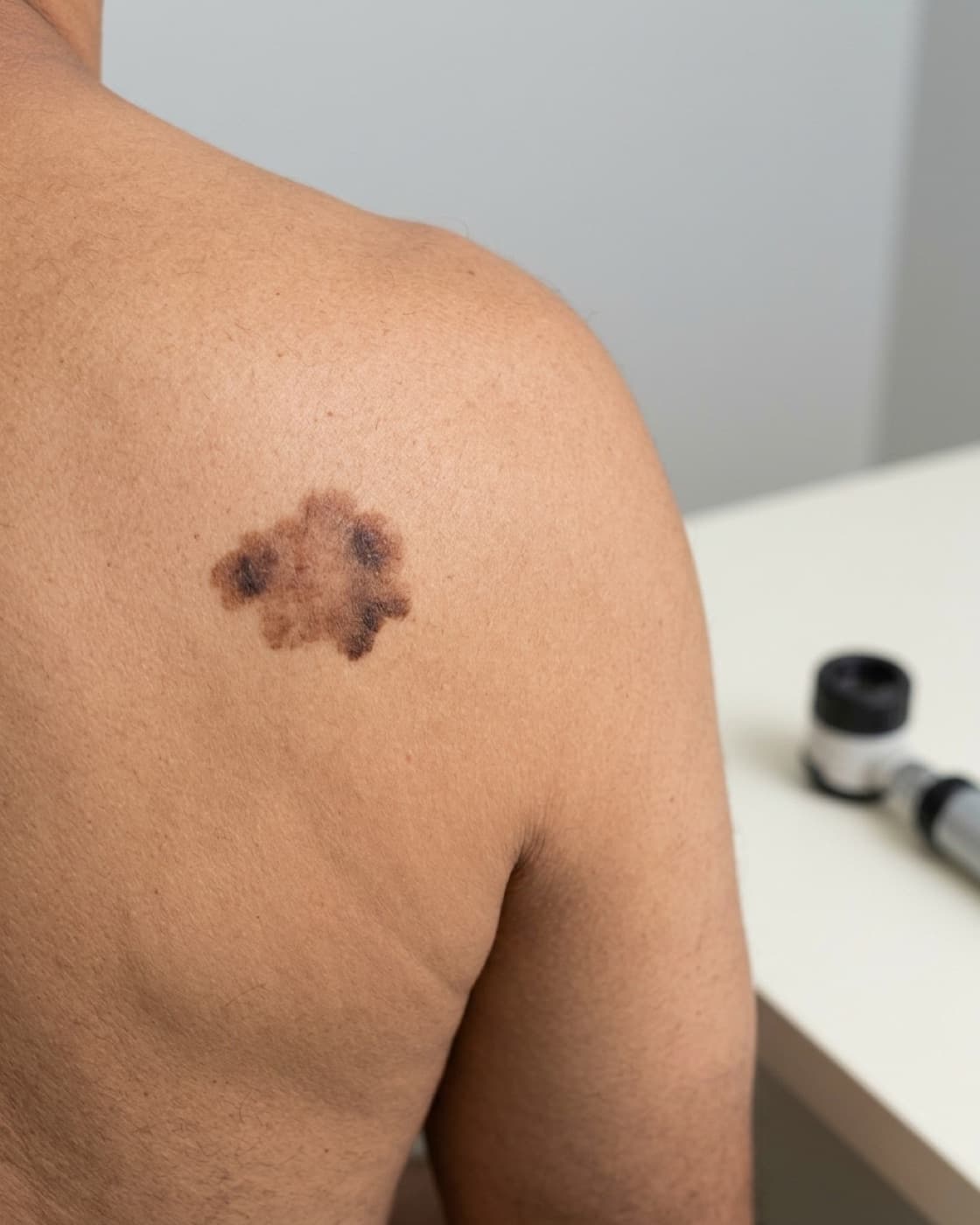
Symptoms and how to recognize it
The ABCDE rule helps identify moles that deserve evaluation:
- A — Asymmetry: one half of the mole different from the other
- B — Borders that are irregular, poorly defined or notched
- C — Colors that vary within the same lesion (brown, black, red, bluish)
- D — Diameter larger than 6 mm
- E — Evolution: change in size, color, shape, itching or bleeding
Another important sign is the "ugly duckling": a mole that looks different from all the others on the body. Dark bands on the nails that appear or widen should also be evaluated.
Causes and risk factors
The main environmental factor is intense, intermittent sun exposure, especially sunburn in childhood and adolescence, and the use of tanning beds. Risk factors include fair skin, eyes and hair, more than 50 moles, atypical moles, a personal or family history of melanoma and low immunity.
Diagnosis
The dermatologist examines the whole skin and evaluates suspicious lesions with dermoscopy. Total body mole mapping with FotoFinder® records the moles and makes it possible to detect changes over time. Confirmation is made by removing the lesion and analyzing it (pathology), which also defines the tumor thickness and guides treatment.
Treatments
- Dermatologic surgeryRemoval of the suspicious lesion and, after confirmation, wider margins.
- Oncological treatmentIn more advanced cases, together with an oncologist and surgeon.
Living with it and prevention
- Avoid sunburn, especially in children.
- Use sunscreen, a hat and protective clothing.
- Do not use tanning beds.
- Examine your skin monthly, with the help of a mirror or another person.
- Keep up regular follow-up with the dermatologist.
When to see a dermatologist
See a dermatologist if you notice a new mole in adulthood, a mole that changes in size, color or shape, itches or bleeds, or a lesion that looks different from the others.
All procedures are recommended and performed after an individual medical evaluation. Results vary from person to person.
Questions
Frequently asked questions
Can melanoma be cured?
Yes, when diagnosed early, usually with surgical removal alone. That is why monitoring moles and evaluating suspicious lesions are so important.
Can any mole turn into melanoma?
Most moles never turn into melanoma, and many melanomas appear as new lesions. What matters is watching for changes and lesions that look different from the others.
Does melanoma only appear in sun-exposed areas?
No. Melanoma can appear anywhere on the body, including the soles, palms, under the nails and on mucous membranes.
Who should have total body mole mapping?
People with many moles, atypical moles, a personal or family history of melanoma, and very fair skin with a history of sunburn benefit from mapping.
Team
Medical team
See also