
Medical dermatology · Skin conditions
Seborrheic keratosis: benign dark spots and age-related warts
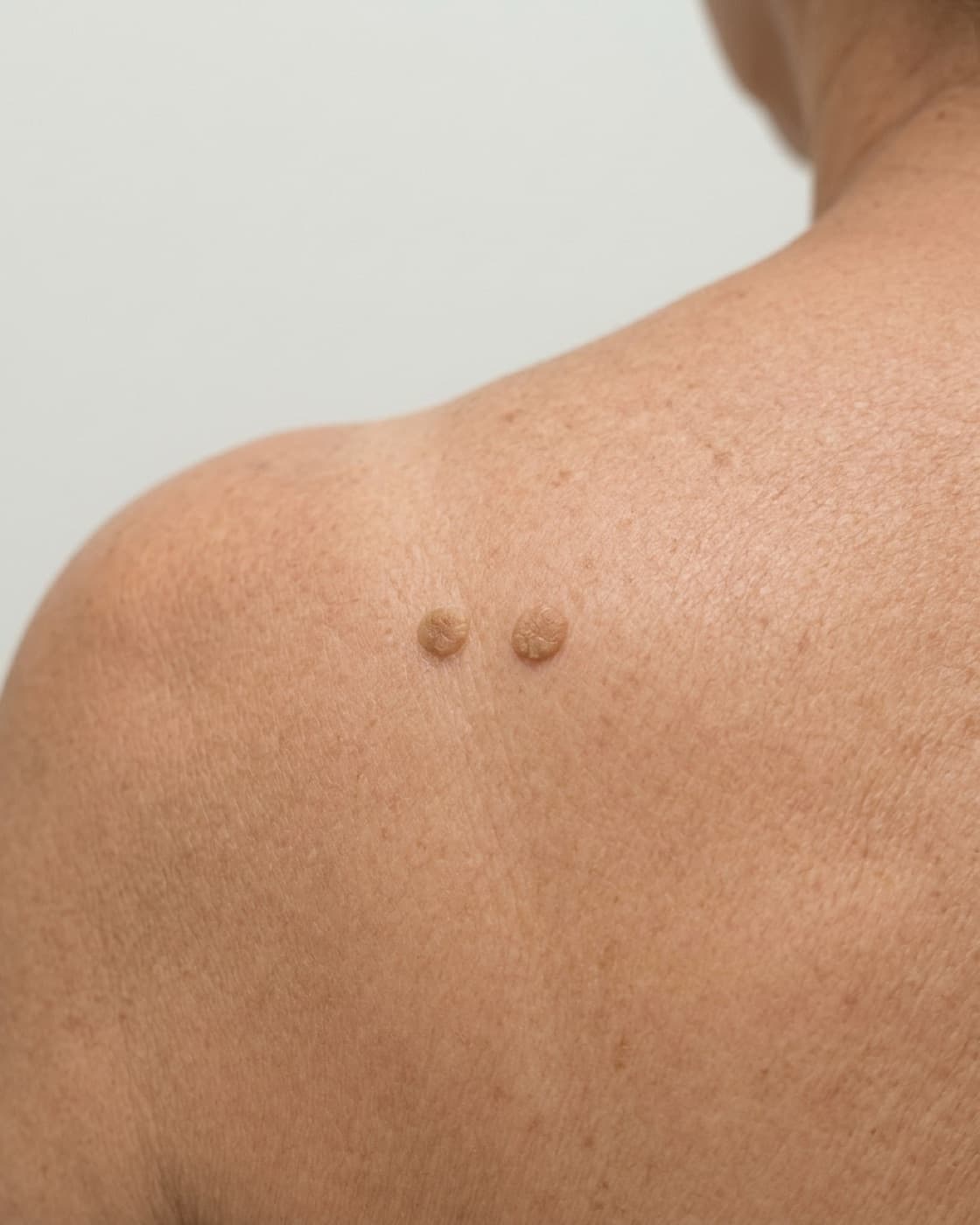
Seborrheic keratosis is a very common benign lesion that appears from age 40, looking like a brownish, raised spot or wart with a rough surface, as if stuck onto the skin. It appears mainly on the torso, face and neck. It does not turn into cancer and is not contagious, but it can be confused with melanoma, so it should be evaluated by a dermatologist. It can be removed for cosmetic reasons or when it gets irritated. At Yamagata Dermatologia, in Ipanema, Rio de Janeiro, diagnosis and treatment are carried out by dermatologists.
Symptoms and how to recognize it
- Brownish or black, raised lesions with a rough or greasy surface
- A stuck-on appearance over the skin
- Gradual appearance of several lesions with age
- Occasional itching or irritation from clothing friction
Causes and risk factors
The exact cause is not known, but there is a strong genetic component, and the lesions become more frequent with age. Sun exposure may favor their appearance on exposed areas.
Diagnosis
Diagnosis is made by the dermatologist through clinical examination and dermoscopy, which shows structures typical of seborrheic keratosis and helps distinguish it from melanoma and other lesions. When in doubt, the lesion is removed for analysis.
Treatments
Removal is optional and indicated for cosmetic reasons, irritation or diagnostic doubt.
- Dermatologic surgeryCryotherapy, cauterization or curettage of the lesions.
- Erbium laserRemoval of superficial lesions, depending on the evaluation.
Living with it and prevention
- Use sunscreen daily.
- Do not pull off or pick at the lesions.
- Have periodic skin checks by a dermatologist, especially if you have many lesions.
When to see a dermatologist
See a dermatologist when a new dark lesion appears, when a lesion changes color, size or shape, bleeds or itches a lot, or when many new lesions appear in a short time.
All procedures are recommended and performed after an individual medical evaluation. Results vary from person to person.
Questions
Frequently asked questions
Can seborrheic keratosis turn into cancer?
No. Seborrheic keratosis is benign. The importance of the evaluation lies in distinguishing it from malignant lesions, such as melanoma, which can look similar.
Why do so many appear with age?
The tendency to develop seborrheic keratoses is genetic and increases with age. Sun exposure may contribute.
Can I remove them at home?
No. Trying to pull off or burn the lesion can cause bleeding, infection and scarring, as well as preventing a correct diagnosis.
Does removal leave a mark?
The mark is usually subtle. A temporary lighter or darker spot may remain, especially on darker skin.
Team
Medical team
See also