
Medical dermatology · Skin conditions
Warts: causes, types and treatments
Warts are benign skin lesions caused by the human papillomavirus (HPV), which infects the superficial layer of the skin. The most common are common warts, on the hands and fingers, plantar warts, on the soles of the feet, and flat warts, on the face and legs. They spread through contact and may disappear on their own, but often need treatment, such as topical medications and cryotherapy. At Yamagata Dermatologia, in Ipanema, Rio de Janeiro, diagnosis and treatment are carried out by dermatologists.
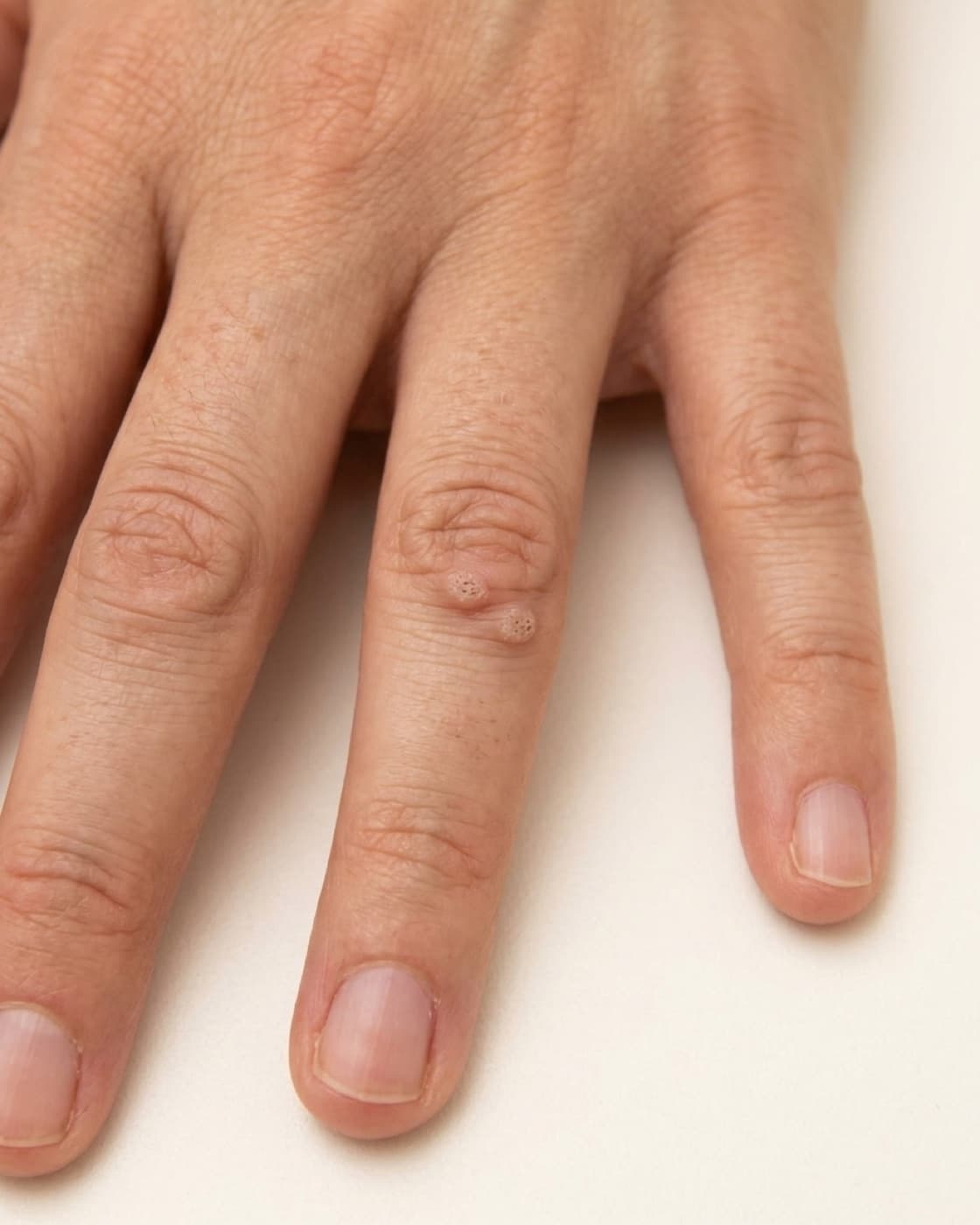
Symptoms and how to recognize it
- Rough, raised lesions on the hands and fingers (common warts)
- Hard lesions that hurt when walking, on the soles of the feet (plantar warts)
- Small, smooth, flat lesions on the face and legs (flat warts)
- Tiny black dots inside the lesion, which are small clotted blood vessels
Causes and risk factors
Warts are caused by HPV, which enters the skin through small injuries. They are more common in children and adolescents, in people who bite their nails or walk barefoot in shared wet areas, and in people with low immunity.
Diagnosis
Diagnosis is clinical, made by the dermatologist by examining the lesion and with dermoscopy, which shows the characteristic dots and helps distinguish warts from calluses and other lesions.
Treatments
Treatment is chosen according to the type, number and location of the warts and the patient's age.
- Topical medicationsAcids and other active ingredients applied to the wart at home, with guidance.
- Dermatologic surgeryCryotherapy (liquid nitrogen), cauterization or removal, depending on the case.
Living with it and prevention
- Do not pick, bite or scratch warts.
- Wear flip-flops at pools, locker rooms and shared wet areas.
- Do not share towels, nail files or nail clippers.
When to see a dermatologist
See a dermatologist when a wart hurts, bleeds, spreads, appears on the face or genital area, does not improve over time, or when the diagnosis is uncertain.
All procedures are recommended and performed after an individual medical evaluation. Results vary from person to person.
Questions
Frequently asked questions
Are warts contagious?
Yes. HPV is transmitted through direct contact with the wart or with contaminated surfaces, such as pool and locker room floors. It can also spread to other parts of the body through scratching or picking.
Do warts go away on their own?
Many warts disappear on their own within months or years, especially in children. Treatment is indicated when they bother, hurt, spread or last a long time.
Can I remove a wart at home?
Cutting, burning or pulling off a wart is not recommended, because it can cause infection and scarring and spread the virus. Some medications can be used at home with medical guidance.
Can a wart turn into cancer?
Common skin warts are benign. Lesions that change in appearance or do not respond to treatment should be evaluated by the dermatologist.
Team
Medical team
See also