
Medical dermatology · Hair and scalp
Scarring alopecia: hair loss with destruction of the follicles
Scarring alopecias are a group of diseases in which inflammation destroys the hair follicles and replaces them with scar tissue, causing permanent hair loss in the affected areas. They include lichen planopilaris, frontal fibrosing alopecia and discoid lupus. Because lost hair does not grow back, early diagnosis and treatment to control the inflammation are essential. At Yamagata Dermatologia, in Ipanema, Rio de Janeiro, diagnosis and treatment are carried out by dermatologists.
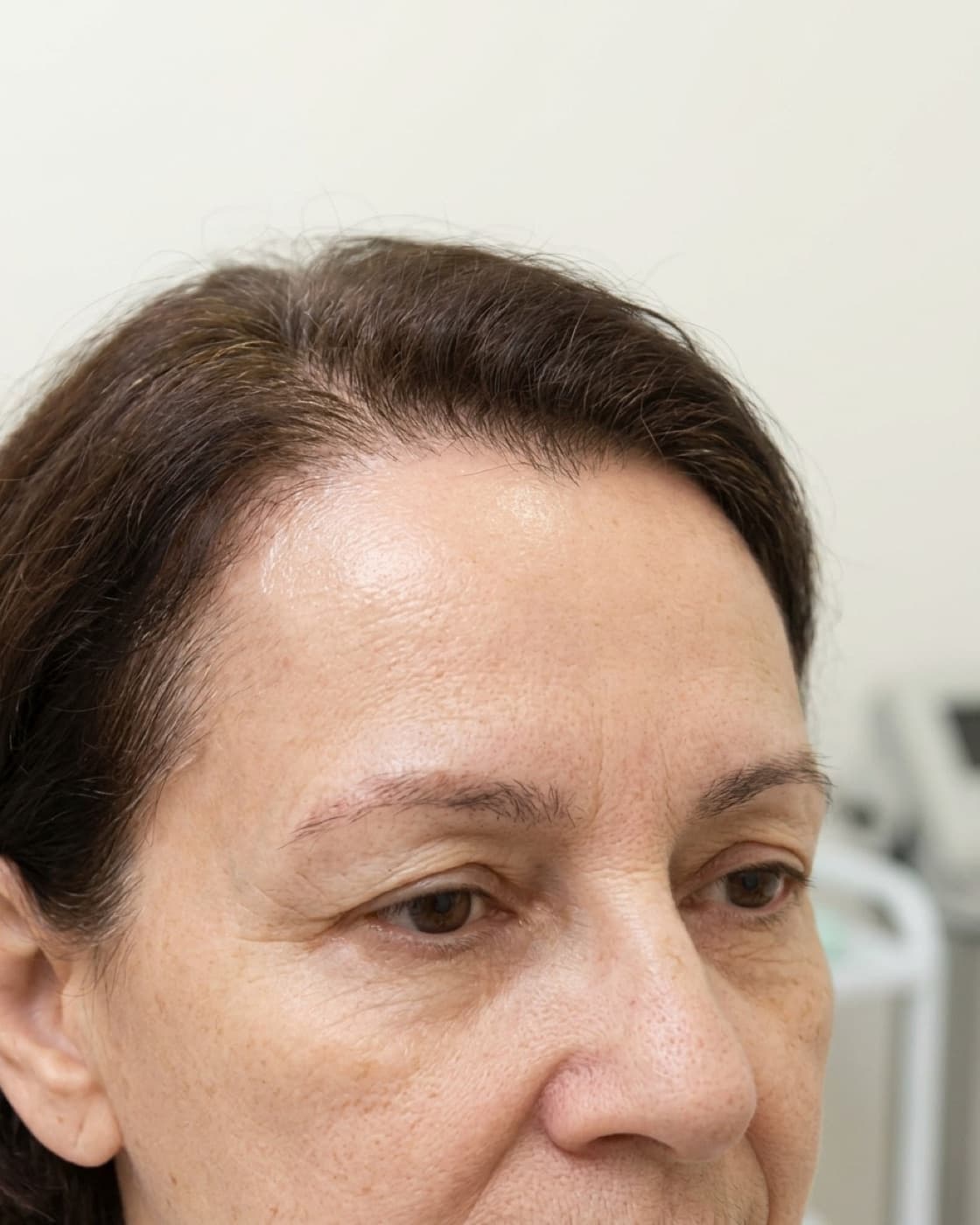
Symptoms and how to recognize it
- Hairless areas with smooth, shiny skin and no follicle openings
- Itching, burning or pain on the scalp
- Redness and scaling around the hairs
- Receding hairline and loss of the eyebrows (frontal fibrosing alopecia)
Causes and risk factors
Primary scarring alopecias are caused by inflammation targeting the follicles, through immune mechanisms, as in lichen planopilaris, frontal fibrosing alopecia, discoid lupus and folliculitis decalvans. Secondary forms result from external damage, such as burns, radiotherapy, severe infections and intense, prolonged traction of the hair.
Diagnosis
Early diagnosis is essential. The dermatologist examines the scalp with digital trichoscopy, which shows the absence of follicle openings and signs of inflammation, and recommends a biopsy to confirm the type of alopecia. Dermatologic ultrasound can complement the assessment of inflammation.
Treatments
- Intralesional injectionControl of inflammation in active areas.
- Topical and oral medicationsTo stop progression, according to the type of alopecia.
Living with it and prevention
- Start treatment as early as possible, to preserve the hair.
- Avoid hairstyles that pull the hair and harsh chemical treatments.
- Keep up regular follow-up, with comparative trichoscopies.
When to see a dermatologist
See a dermatologist if you notice hairless areas with smooth skin, persistent itching or burning on the scalp, a receding hairline or loss of the eyebrows.
All procedures are recommended and performed after an individual medical evaluation. Results vary from person to person.
Questions
Frequently asked questions
Does hair grow back in scarring alopecia?
Not in the areas where the follicle has been destroyed. The goal of treatment is to stop the inflammation and preserve the hair that remains.
Why is a biopsy needed?
A scalp biopsy confirms the type of scarring alopecia, which defines the treatment. Trichoscopy helps choose the best site for it.
Is frontal fibrosing alopecia becoming more common?
Over the last decades, reported cases have increased, mainly in women after menopause. The causes are still being studied.
Is a hair transplant an option?
Only in selected cases, when the disease has been inactive for a long time, because the inflammation can also destroy the transplanted hair.
Team
Medical team
See also