
Medical dermatology · Hair and scalp
Alopecia areata: round bald patches on the scalp and beard
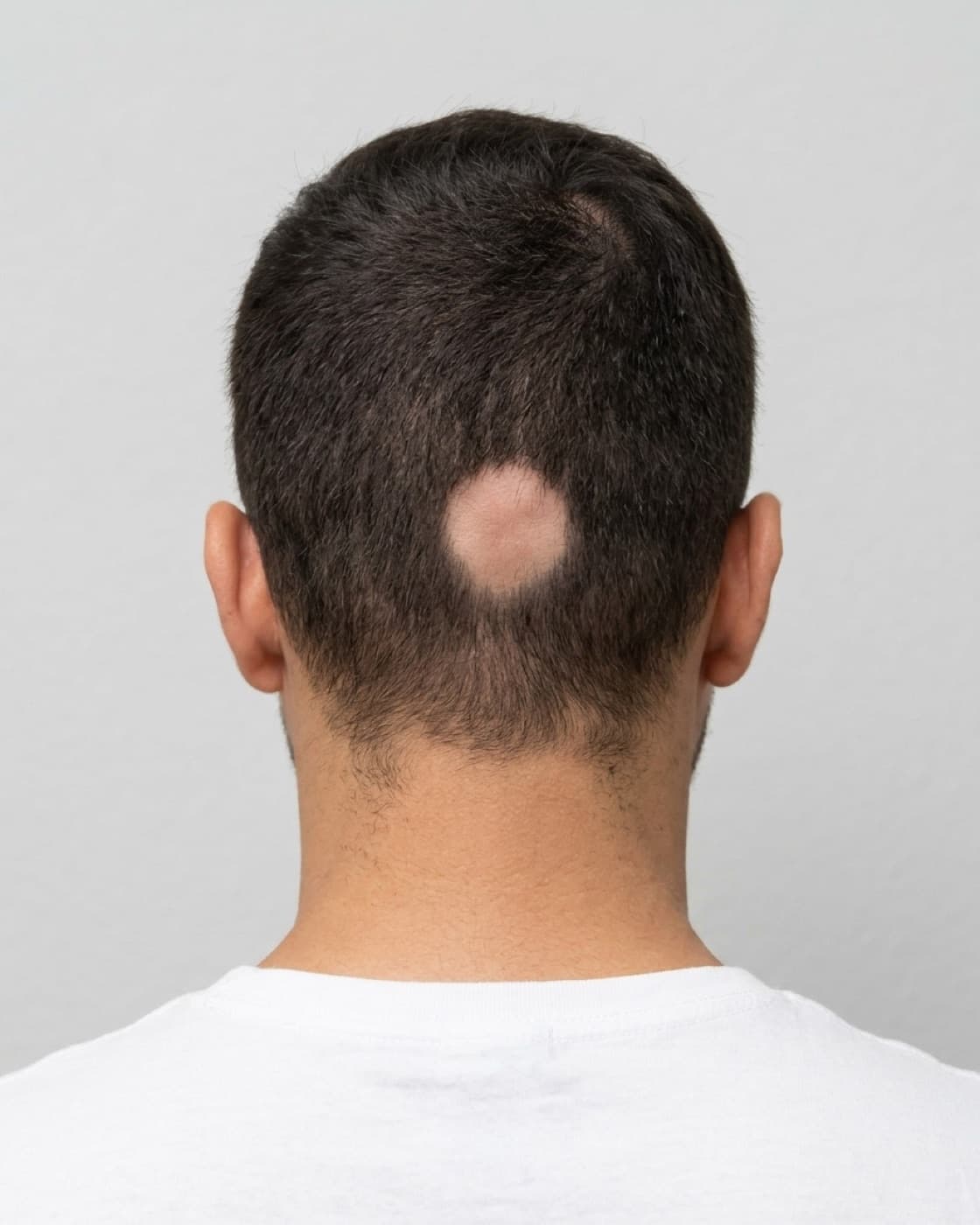
Alopecia areata is an autoimmune disease in which the immune system attacks the hair follicles, causing round, smooth bald patches on the scalp, beard, eyebrows or other areas. The follicles are not destroyed, so the hair can grow back. Its course is unpredictable: many patches improve on their own or with treatment, and some cases are more extensive. At Yamagata Dermatologia, in Ipanema, Rio de Janeiro, diagnosis and treatment are carried out by dermatologists.
Symptoms and how to recognize it
- Round, smooth patches without hair on the scalp or beard
- Normal-looking skin in the patch, without flaking or scarring
- Short, exclamation-mark hairs at the edges
- Nail changes, such as small pits, in some cases
- Extensive forms, with loss of all scalp or body hair
Causes and risk factors
Alopecia areata is an autoimmune disease: defense cells attack the follicles in the growth phase, which stop producing hair. There is a genetic predisposition, and the disease is more common in people with other autoimmune conditions, such as thyroid disease and vitiligo, and with atopic dermatitis.
Diagnosis
Diagnosis is clinical, by examining the patches and with digital trichoscopy, which shows typical signs, such as exclamation-mark hairs. Blood tests may be ordered to investigate associated diseases.
Treatments
Treatment depends on the extent and duration of the disease.
- Intralesional injectionCorticosteroid injected into the patches, in localized forms.
- Topical and oral medicationsIn extensive or unresponsive forms, depending on the evaluation.
Living with it and prevention
- Protect hairless areas from the sun.
- Seek support when hair loss affects your self-esteem.
- Keep up follow-up to treat new episodes early.
When to see a dermatologist
See a dermatologist if you notice a round bald patch on your scalp, beard or eyebrows, or when the patches increase in number or size.
All procedures are recommended and performed after an individual medical evaluation. Results vary from person to person.
Questions
Frequently asked questions
Will the hair grow back?
In many cases, yes, because the follicles are not destroyed. In small patches, growth usually returns within months, with or without treatment. In extensive forms, the response is more variable.
Is alopecia areata caused by stress?
Stress can trigger or worsen episodes in some people, but the disease is autoimmune and has a genetic predisposition.
Is alopecia areata contagious?
No. The disease is not contagious.
Can it come back?
Yes. Alopecia areata can have new episodes throughout life, and follow-up helps treat them early.
Team
Medical team
See also