
Medical dermatology · Skin conditions
Keloids and hypertrophic scars: raised scars and how to treat them
Keloids and hypertrophic scars are raised scars caused by excessive collagen production during healing. A hypertrophic scar stays within the area of the injury and tends to improve over time; a keloid extends beyond the original wound, may keep growing and often returns after removal. Both can itch and hurt and are treated with injections, compression, silicone and, in selected cases, surgery. At Yamagata Dermatologia, in Ipanema, Rio de Janeiro, diagnosis and treatment are carried out by dermatologists.
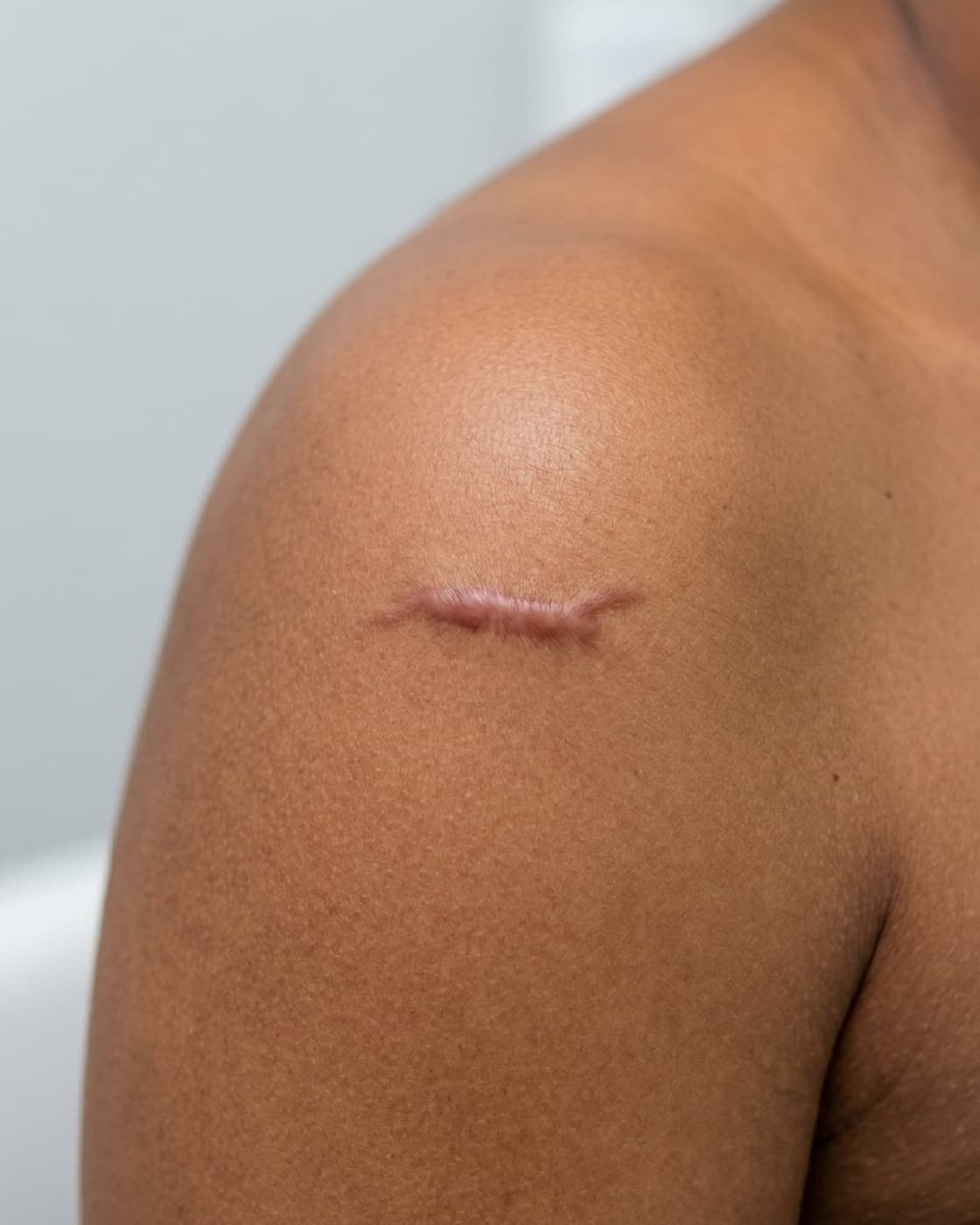
Symptoms and how to recognize it
- Raised, firm, red or darkened scar
- Itching, tenderness or pain in the scar
- In keloids, growth beyond the limits of the original wound
- Common areas: earlobe, chest, shoulders and back
Causes and risk factors
During healing, the skin produces collagen to close the wound. In some people, this production does not stop at the right time, and the scar becomes raised. Risk factors include genetic predisposition, darker skin, age between 10 and 30, skin tension (as on the chest and shoulders), infection or delayed healing, and inflammatory acne.
Diagnosis
Diagnosis is clinical, made by the dermatologist by examining the scar and the history of the injury that caused it. In atypical cases, a biopsy may be done to rule out other lesions.
Treatments
Treatment usually combines techniques and is most effective on recent scars.
- Intralesional injectionCorticosteroid injected into the scar, which reduces height, itching and pain.
- Silicone sheets and gels and compressionContinuous use over the scar, especially on recent scars.
- Dermatologic surgeryRemoval in selected cases, always combined with other treatments to prevent recurrence.
Living with it and prevention
- Tell your doctor about your tendency to keloids before surgery and procedures.
- Use silicone and compression on recent scars, as advised.
- Protect scars from the sun to prevent darkening.
- Treat acne early.
When to see a dermatologist
See a dermatologist when a scar starts to grow, itch or hurt, or when you are prone to keloids and need to have a procedure.
All procedures are recommended and performed after an individual medical evaluation. Results vary from person to person.
Questions
Frequently asked questions
What is the difference between a keloid and a hypertrophic scar?
A hypertrophic scar stays within the area of the cut or wound and tends to flatten over time. A keloid grows beyond the original wound, does not regress on its own and is more likely to return after treatment.
Does surgical removal of a keloid solve the problem?
Surgery alone carries a high risk of the keloid coming back, sometimes larger. For this reason, when indicated, it is always combined with injections, compression or other treatments.
Can people prone to keloids get ear piercings or tattoos?
People prone to keloids should avoid procedures that injure the skin unnecessarily, such as piercings and tattoos, and tell the doctor before surgery.
Can keloids be prevented?
In people with a tendency, early use of silicone and compression on recent scars and treatment as soon as growth begins reduce the risk.
Team
Medical team
See also