Concerns · Face
Nose: dorsal hump, drooping tip and small asymmetries without surgery
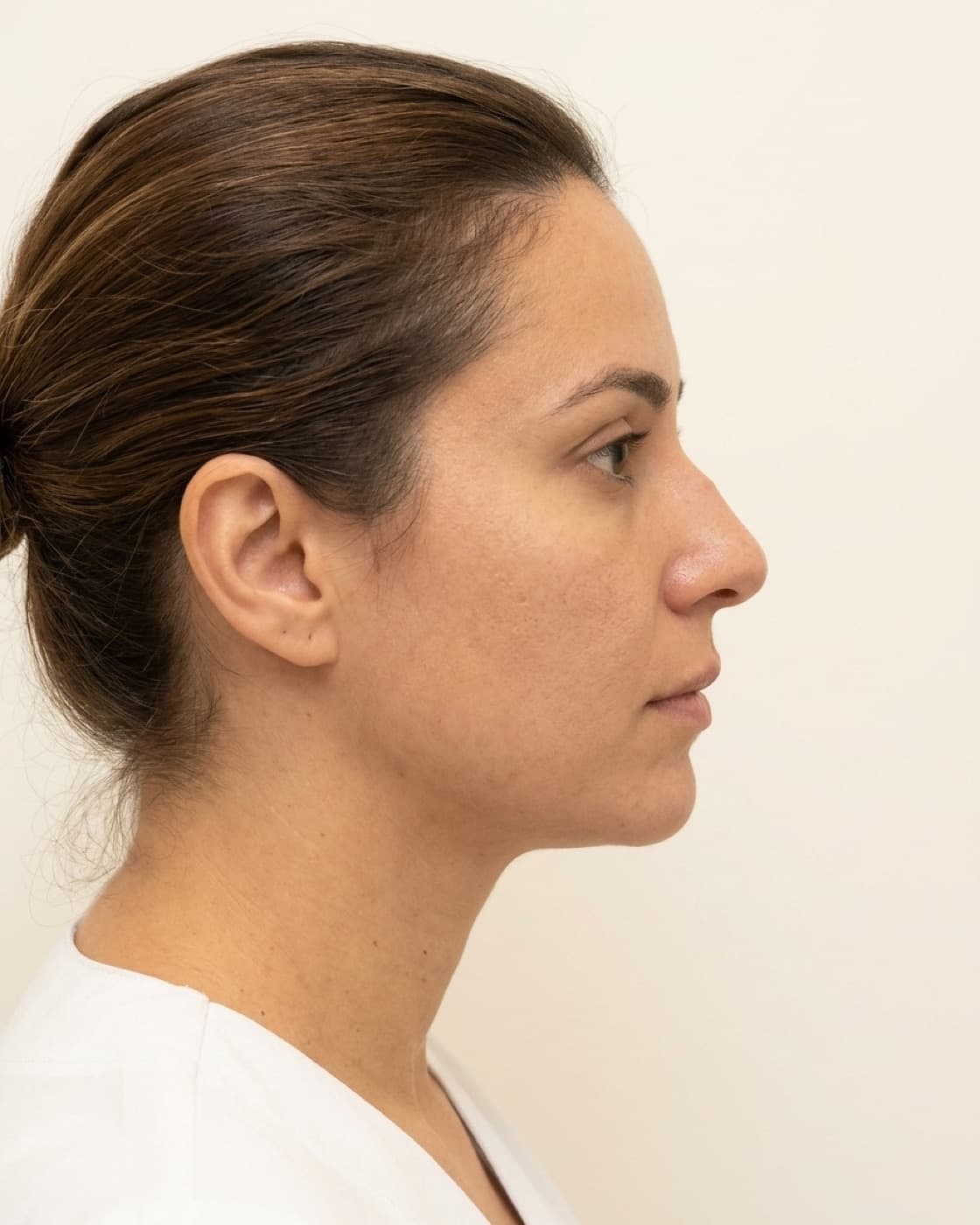
Small irregularities of the nose, such as a dorsal hump (the bump on the bridge), a drooping tip, depressions and mild asymmetries, can be softened without surgery with non-surgical nose reshaping, which uses small amounts of hyaluronic acid. The treatment does not reduce the size of the nose: large noses or significant deviations are treated with rhinoplasty. At Yamagata Dermatologia, in Ipanema, Rio de Janeiro, the indication is made by a dermatologist at the appointment.
Why it happens
The shape of the nose is defined by genetics, the bones and cartilage and the skin that covers them. Some features, such as a dorsal hump or a drooping tip, are present from birth; others become more pronounced with aging, when the tip tends to drop and the angle between the nose and the lip decreases.
The nose is also influenced by the rest of the face: a weak chin, for example, makes the nose look bigger in profile.
How the evaluation is done
The dermatologist assesses the nose from the front and in profile, its relationship with the chin and lips and the patient's expectations, and determines whether the concern can be treated without surgery or whether rhinoplasty is more appropriate.
Recommended treatments
- Non-surgical nose reshapingCamouflages the hump, lifts the tip and corrects small asymmetries.
- Chin fillerA more projected chin balances the profile and the apparent size of the nose.
- HyaluronidaseCorrection of irregularities after previous fillers.
Combined treatments
In many cases, the harmony of the profile improves by combining non-surgical nose reshaping with chin filler, which balances the proportions of the face.
All procedures are recommended and performed after an individual medical evaluation. Results vary from person to person.
Questions
Frequently asked questions
Does non-surgical nose reshaping make the nose smaller?
No. It adds small amounts of gel to camouflage irregularities, which improves harmony, but it does not reduce the size of the nose. For that, the indication is rhinoplasty.
Can people with a deviated septum have it?
Non-surgical nose reshaping treats the external appearance of the nose and does not correct a deviated septum, which affects breathing and is treated by an ear, nose and throat specialist.
Is it safe to fill the nose?
The nose has important blood vessels, which requires careful technique and detailed knowledge of the anatomy. Performed by a physician, with a suitable product and in a setting prepared to manage complications, the procedure has a good safety profile.
How long does it last?
On average, 12 to 18 months, varying from person to person.
Team
Medical team
See also